bell hooks, Living to Transgress

bell hooks is a feminist author and activist from the United States. Her name by birth is Gloria Jean Watkins, but she took the name bell hooks in honor of her maternal great-grandmother. hooks was born, one of seven children, to Veodis Watkins, a custodian, and Rosa Bell Watkins, a homemaker. She was raised in Hopkinsville, a segregated town in rural Kentucky, where she experienced firsthand both the hardships of segregated schools and, later, the process of integration.

Upon graduating high school, hooks attended Stanford University graduating with a BA in English in 1973 then continued on University of Madison, receiving her MA in English in 1976. Afterward, she split her focus between teaching Ethnic Studies at the University of South California and writing—publishing her first work, “And There We Wept,” a chapbook of poetry in 1978 and Ain’t I a Woman?: Black Women and Feminism in 1981—while, also, working towards a doctorate in literature at the University of California, which she achieved in 1983[1].

250792.gif

hooks spent her academic career as a scholar of African-American literature, writing her PhD dissertation on Toni Morrison, but her influences include a wide array thinkers including, amongst others: playwright Lorraine Hansberry, pedagogical theorist Paulo Freire, theologian Gustavo Gutiérrez, psychologist Erich Fromm, historian Walter Rodney as well as peace activist Thich Nhat Hahn and civil rights leaders, Malcolm X and Martin Luther King Jr.[2].

As such, hooks quickly became one of the foremost theorists of intersectionality, a framework which has recently gained great popularity in the analysis of systems of power within society and has combined her analysis of power relations with her academic career, writing texts dedicated to the topic of pedagogy. In her 1994 book Teaching to Transgress: Education as the Practice of Freedom, hooks advocates for “a way of teaching in which anyone can learn.” One in which educators help students “transgress” boundaries of race, class, and sexuality to achieve intellectual and, so too, personal, social, and cultural freedom[3].

hooks 2.tif

Implementing her own theories into practice, hooks, as a professor teaching at a variety of institutions from University of California, Santa Cruz and San Francisco State, to Yale University in New Haven, Connecticut and Oberlin College in Ohio, often found herself referencing pop culture in efforts to help students connect to theories of intersectionality. In doing so, she found herself grappling with new material in an entirely different field, media studies that would become the basis for her 1994 book Outlaw Culture.

In bell hooks’ own words: “Whether we’re talking about race or gender or class, popular culture is where the pedagogy is, it’s where the learning is. So I think that partially people like me who started off doing feminist theory or more traditional literary criticism or what have you begin to write about popular culture, largely because of the impact it was having as the primary pedagogical medium for masses of people globally who want to, in some way, understand the politics of difference. I mean it’s been really exciting for someone like me, both in terms of the personal desires I have to remain bonded with the working-class culture and experience that I came from as well as the sort of southern black aspect of that and at the same time to be a part of a diasporic world culture of ideas and to see how there can be a kind of interplay between all of those different forces. Popular culture is one of the sites where there can be an interplay[4].”

—Cecily McMillan

Works Cited

[1] Notable Biographies – bell hooks

[2] Notes on IAPL 2001 Keynote Speaker, bell hooks

[3] Teaching to transgress: education as the practice of freedom by bell hooks

[4] bell hooks – cultural criticism and transformation

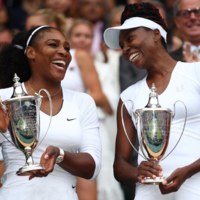
Venus and Serena Williams: From Compton to the Courts

With big smiles and several tiny braids adorned with colorful beads, the Williams sisters arrived on the tennis courts that never saw them coming. Legend (and a snippet from an E! True Hollywood Story) has it that their father Richard, who worked security before the sisters were born, once watched the winner of a women’s tennis match collect a check for more money than he’d ever made and prophesied his future daughters’ domination of the tennis world. He trained them on courts near their home in Compton, California – the same hood where those O.G.s of Gangsta Rap, Dr. Dre and Snoop, put both their raps and their macks down.

But, well, back to the lecture at hand.

Serena, Venus, and their five siblings were raised as Jehovah’s Witnesses in a part of Compton that didn’t make it to music videos: the wholly unglamorous one-story homes with picket fences surrounding small backyards. The Williams family led a fairly routine, “normal” life which included several hours of early morning tennis practice followed by home-school lessons. In a brazen move, while affluent parents sought expensive and exclusive lessons for their future tennis champions, Mr. Williams initially coached the girls himself after teaching himself the game via instructional videos. This tension between the carefully crafted game of prestige and the scrappy, can-do attitude of the Williamses played out in myriad ways, some nuanced and some blatant.

The Williams Sisters – Their Rise to Fame

Williams continued to coach the girls, only sending the girls to Brentwood coaches and tennis academies every now and then, and he boldly chose to keep his daughters out of the junior tennis circuits, where products of elite training schools competed for press and notoriety. The Williams Sisters’ sudden appearance on the courts seemed to shock the country club crowd that didn’t seem previously exposed to such… diversity.

They were viewed by some as disrespectful disturbers of the tennis circuit’s norms. Their powerful strength game visibly differed from the precision and speed game the beiger players had meticulously cultivated, and their absence from the prep schools and junior tournaments appeared to confirm their lack of “proper” training and etiquette.

Several platforms sustained efforts to subtly critique sisters’ background, family bond, dress/hair style, athletic strength. The intense media surveillance of them almost seemed determined to “keep an eye” on what was considered a threat. The media tried to downplay the sisters’ major achievements, their contributions to the black community, and their obvious inherent talent. But neither Venus nor Serena made an effort to hide signifiers of black culture and style, like braids, or their cultivation of outside interests, and the black community often voiced praise of the young women who had already broken barriers just by stepping onto those courts and appearing in the news articles which noted black talent, black excellence, and just overall black girl magic.

Even as they faced criticism from their peers for being aloof and daring to pursue educations, they quickly caught Corporate America’s attention and signed lucrative endorsement deals, one with Reebok for $12,000, 000 over five years.

The family continued on The Glow Up (that Concept Formerly Known as The American Dream): Venus was representing international brand, they bought a mansion in Florida with its own tennis courts, and the girls started to attend a noteworthy private school. The Williams were following the footsteps of Althea Gibson, who was the only African-American woman to win a Grand Slam title before Venus and Serena basically won the 90’s – they won their first Doubles title in 1998 and the U.S. Open Doubles title in 1999, the same year Serena defeated longtime champion Martina Hingis to win the U.S. Open Grand Slam. Their international tennis rankings skyrocketed; their investments of time and hard work were finally paying off, and they would eventually continue on to win the 00’s. But performing on a larger stage brought even more visible racist sentiments to the forefront.

Serena, in particular, was routinely attacked for qualities white culture has often attributed to black women. In the 1800s, Saartjie Baartman (“Hottentot Venus”), a South African woman, was brought to London in 1810 as a symbol of racial difference (and the supposed superiority of white beauty) and placed in a circus display alongside conjoined twins, dwarfs, and other alleged “deviants.”

“… Hottentot was assigned the role of a creature bridging human and animal realms” (Strother, 4).

According to their father, the Williams sisters were trained to be “warriors,” “attack dogs.” But the media and several tennis enthusiasts ridiculed and chastised them for their “beast-like” physical appearances, “lewd” athletic wear, and “angry” outbursts. They tended to characterize Serena and Venus using some of the most common stereotypes of black women: overly sexualized women (who chose to wear outfits they liked whether or not those clothes highlighted physical features that tennis viewers were not used to seeing) and angry black women (who dared to express basic human emotions like frustration without wearing a mask to protect the “delicate” sensibilities of an audience famous for its dignified silence and barely audible clapping).

During the 1997 U.S. Open Women’s Singles Semi-Final match between an unseeded Venus and an 11th-seeded Irina Spirlea, both players bumped into each other as they customarily switched sides during a changeover. Williams said neither of them were looking where they were going; Spirlea said she expected Venus to move out of the way.

Venus Williams_Irina Spirlea US Open “Bump”

“She’s not going to turn … I’ve done it all the time, I turn. But she just walks. I wanted to see if she was going to turn. She didn’t.” – Irina Spirlea (This is the clean version of the quote. Make your best guess for which obscenity she used to describe Venus.)

Such inane controversies were veiled attempts to subdue the sisters who would routinely take long breaks from the game, only to come back stronger and more determined to embarrass those who underestimated them.

Venus and Serena continue to raise questions about what it means to be feminine, beautiful, strong, black, successful, wealthy, and sisters; despite their numerous successes, they also unfortunately still encounter racism, forcing them to boycott tournaments and defend themselves when they choose to finally fight  back. Their eagerly and bitterly watched debut in the 90’s served as a harsh reminder that the black athleticism which white audiences celebrated on basketball courts and football fields did not translate to women’s sports, especially one which still requires its players to dress in all white for certain tournaments. But their exuberance in play and dignity in the face of charged attacks and elitist snubbing also won them many fans who finally saw themselves represented in uncharted territory.

— Radhika Nataraj

Works Cited

  • Alexander, Rachel. “Open Final Lands on Venus.” Washington Post, 6 Sept. 1997, p. B1.
  • Bass-Adams, Valerie N., Keisha L. Bentley-Edwards, Howard C. Stevenson. “That Not the Me I see on TV…! African American Youth Interpret Media Images of Black Females.” Women, Gender, and Families of Color, vol. 2, no. 1, 2014, pp. 79-100.
  • Douglas, Delia. “Venus, Serena, and the Inconspicuous Consumption of Blackness: A Commentary on Surveillance, Race Talk, and New Racism(s).” Journal of Black Studies, vol. 43, no. 2, 2012, pp. 127-45.
  • Hobson, Janell. “The ‘Batty’ Politic: Toward an Aesthetic of the Black Female Body.” Hypatia, vol. 18, no. 4, 2003, pp. 87-105.
  • Strother, Z.S. “Display of the body Hottentot.” Africans on Stage, Indiana UP, 1999, pp. 1-
  • Wright, Joshua. “Be Like Mike? The Black Athlete’s Dilemma.” Spectrum: A Journal on Black Men, vol. 4, no. 2, 2016, pp. 1-19.


Why Bill Clinton Was Called “Our First Black President”: Saxophones, Black Votes, and Toni Morrison

Over fifteen years before Barack Obama was sworn into the Oval Office and became the United States’ first black President, Bill Clinton was called “our first black President.”

So how is it that the nation’s 42nd (white) president got that honorific before the first actual Black president?

The answer is a story that really spans the duration of Clinton’s presidency. Founding member of the National Association of Black Journalists, Dewayne Wickham, probably tells it best in his acclaimed book, Bill Clinton and Black America (2004). In his book, Wickham accounts for “the large African-American presence in [Clinton’s] administration, his perceived legal persecutions, his personal style,” and “his lasting yet tumultuous marriage”—not to mention his relocation to NYC’s Harlem after his presidency—which help explain why the former-Arkansas-governor-turned-president appealed so well to the American black community of the 1990s.

While this post can’t pretend to have a more extensive answer than Wickham in that regard, it can seek to provide a more succinct and specific answer to why Bill Clinton was (and indeed in some circles might still be called) “our first black President.” My answer to this question boils down to the following three essential events of the Black 1990s:

  1. The Arsenio Hall Show hosted Bill Clinton playing the saxophone in June of 1992, which helped Clinton win the hearts of Black America in a big way.
  2. Black voters turned out to give Bill Clinton a supermajority of their votes in November of 1992.
  3. Toni Morrison wrote Bill Clinton into Black History when she literally called him “our first black President in 1998”

Although I will touch on some of the complications and contradictions inherent to attributing Clinton this honorific, I will not be able to address those problems in deep detail, particularly as they include his complicit usage of the term “superpredators” to implicitly describe young, urban (codeword: black) criminals who purportedly preyed on America’s youth to partake in gang culture in the early 1990s. Addressing those problems in the detail they deserve would take the length of another post, if not a full-length article, to explain sufficiently.

In channeling the former president’s birthplace in my home state of Arkansas, my hope is that this post will generate interest in crafting a more careful and critical post that can balance the other side of the honor and praise that is so often allotted to Bill Clinton. At the same time, I hope it will recognize that the former president contributed more than most of the presidents that came before him in terms of representing the American black community during his administration.

The Saxophone

Directly after Bill Clinton clinched the Democratic Party’s nomination for president in 1992, The Arsenio Hall Show hosted the newly minted presidential candidate.

Out of this hosting opportunity, Clinton not only decided to make an appearance; he deliberately sought to show his soulful side to the American black community by kicking off the show playing Elvis Presley’s “Heartbreak Hotel” on his tenor saxophone. Casually and with sunglasses. Almost like another member of Hall’s band. The rest became history. Hall’s amicable and subsequent interview with Clinton effectively served to endorse the Democratic candidate, on a predominantly black show with a predominantly black audience, for president in 1992.

And so, what would also turn out to be a controversial appearance on Arsenio Hall literally set the stage for Clinton to clinch a supermajority (83%) of the Black Vote in November of that same year.

The Black Vote

On November 8, 1992, Bill Clinton received a greater percentage of the black vote than any president to win a U.S. Presidential election since Jimmy Carter in 1976.

Data Source: Roper Center for Public Opinion Research (Cornell University)

After winning the election, Clinton also appointed a number of black American citizens to serve in his administration, including but not limited to:

  • Mike Espy, Secretary of Agriculture (1993)
  • Ron Brown, Secretary of Commerce (1993)
  • Hazel R. O’ Leary, Secretary of Energy (1993)
  • Jesse Brown, Secretary of Veterans Affairs (1993)
  • Alexis Herman, Secretary of Labor (1997)
  • Rodney E. Slater, Secretary of Transportation (1997)
  • Togo D. West, Jr., Secretary of Veterans Affairs (1998)

In fact, Clinton appointed more black Cabinet Secretaries than any U.S. president in the nation’s history, including Barack Obama. Doing so gave the Clinton the appearance not only of better representing black people in the nation’s highest office, but also of rewarding black voters for turning out to vote for him with real change at the highest levels of administration.

And in 1999, towards the end of Clinton’s presidency, the Clinton White House sought to commemorate such real changes with a web page titled “Working on Behalf of African Americans.”

This page mentions over 80 initiatives that the Clinton administration advocated for and took part in during their time in office, including but not limited to (and these are line-items lifted directly from the page):

  • Closing the Book on A Generation of Deficits.
  • Real Wages Are Rising for African Americans. 
  • Addressing HIV/AIDS in Minority Community with an Historic $130 Million Effort. 
  • Extended Health Care to Millions of Children with the Children’s Health Insurance Program (CHIP).
  • Hosted the First-Ever White House Conference on Africa in July 1994.
  • Launched the President’s Partnership for Economic Opportunity in Africa Initiative. 

But the ultimate event that that made Bill Clinton America’s “first black president, was the stroke of Toni Morrison’s pen in 1998 during the sex scandal that shook Clinton’s presidency to the core.

Toni Morrison Calls Clinton “our First Black President”

Noting the heightened political rhetoric of impeachment coming out of Washington in wake of the Clinton-Lewinsky scandal, Toni Morrison wrote a short, slightly miffed column for The New Yorker that would make history in October of 1998.

In her column, Morrison called attention to the news media’s unrelenting coverage of the sex scandal, as well as its similarity to the all-too-American narrative of covering America black men with unrelenting bias and surveillance.


Over the years, and especially since Barack Obama was rightfully heralded as the United States’ first black president, Morrison has received substantial blowback for calling a white president “our first black President.” Most of this blowback, however, stems from the assumption that she was praising Clinton, when she in fact was

[D]eploring the way in which President Clinton was being treated […] like a black on the street, already guilty, already a perp. I have no idea what his real instincts are, in terms of race.”

In other words, the reasons why Clinton was called “the first black President” are myriad, but they had less to do with race than they had to do with representation.

— Joshua Ryan Jackson

Works Cited

“Bill Clinton on the Arsenio Hall Show (1992).” YouTube, uploaded by The Arsenio Hall Show, 15 January 2018, https://www.youtube.com/watch?v=Vaj8iCCZFhM.

Morrison, Toni. “Comment.” The New Yorker. October 5 1998, https://www.newyorker.com/magazine/1998/10/05/comment-6543, Accessed 28 April 2018.

Wickham, Dewayne. Bill Clinton and Black America. One World, 2004.

So Anxious: Black Love & Intimacy in Black R&B Music Videos


What does Black love feel like?

Many of us have grown up listening to sultry sexy artist like D’Angelo, Jodeci, Janet Jackson, Sade, Ginuwine and SWV. These are just a few of many R&B artists that have provided the perfect soundtrack to serenade your lover. If you had the perfect night in with your lover, D’Angelo’s “Brown Sugar” or Monica’s “Angel of Mine” probably set the mood and help the one you loved most understand and sense what you were feeling. However, one important aspect of these artists and their passionate love songs is how the artist and director were both able to create an intimate imagery of Black love and sexuality that was nostalgic and beautiful.

What does Black love look like?

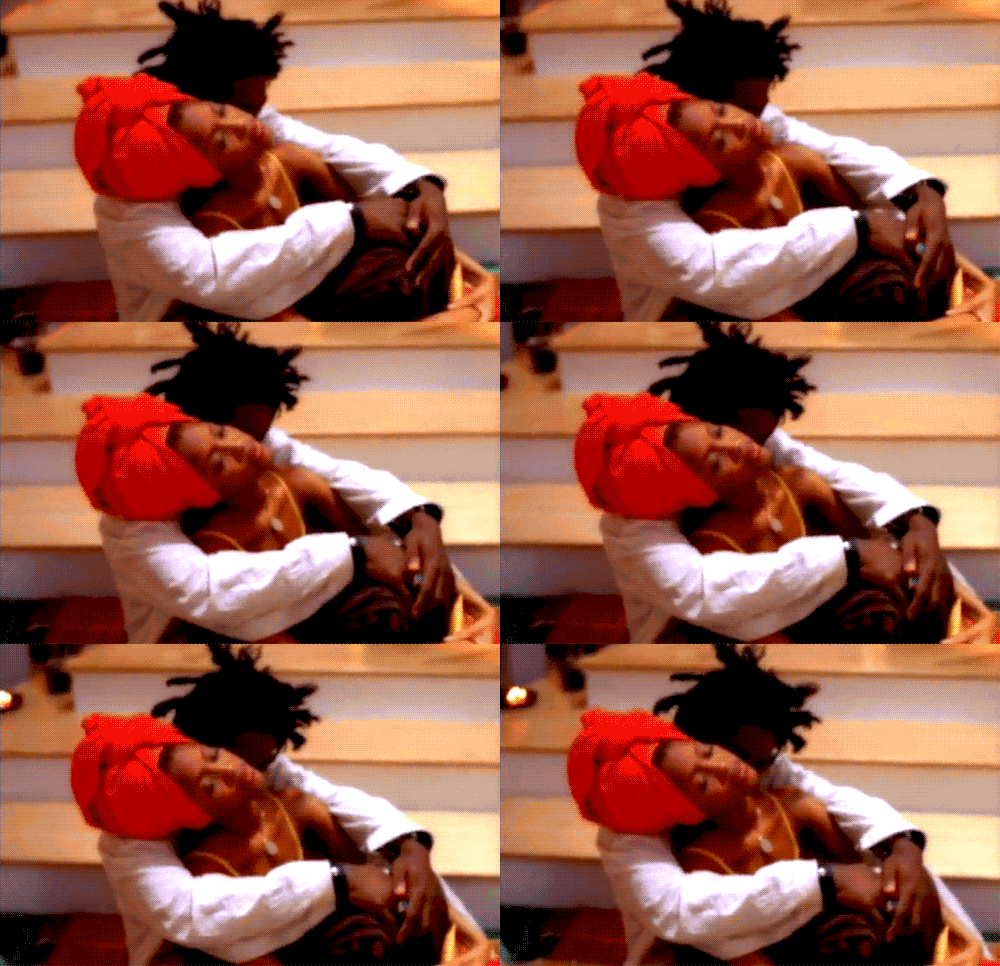
If I had to decide, to me it looks like Erykah Badu and Andre 3000 in her 1997 song “Otherside of the Game”. Erykah describes the commitment and love she has for her Black man and the things she goes through as the girlfriend of a drug dealer. In the video, you see a pregnant Erykah and a busy Andre 3000 co-existing in their loft starting their day. Importantly, this song provides an iconic soundtrack to what they are experiencing that morning along with showcasing their love as she wakes Andre up, they play fight, he caresses her belly and holds her tight as they embrace. This video provides an everydayness of waking up together and loving each other where others who watch the video can resonate with.

I also think in Joe’s video, “All The Things Your Man Wont Do”, there is sex appeal and curiosity between him and his lover.  In the beginning, you see Joe confessing his love to a woman on a pay phone and telling her that she deserves better.

This inevitably leads him to make an appearance at her job where he continues to serenade her and convince this Black woman that he possesses qualities that her current boyfriend does not. Throughout the video, the director creates a late-night mood and intimacy that is shared between the two. This is seen in the way the young woman flirts with Joe in the restaurant and making the ultimate sacrifice to take a chance with a better man

How far will Black love go?

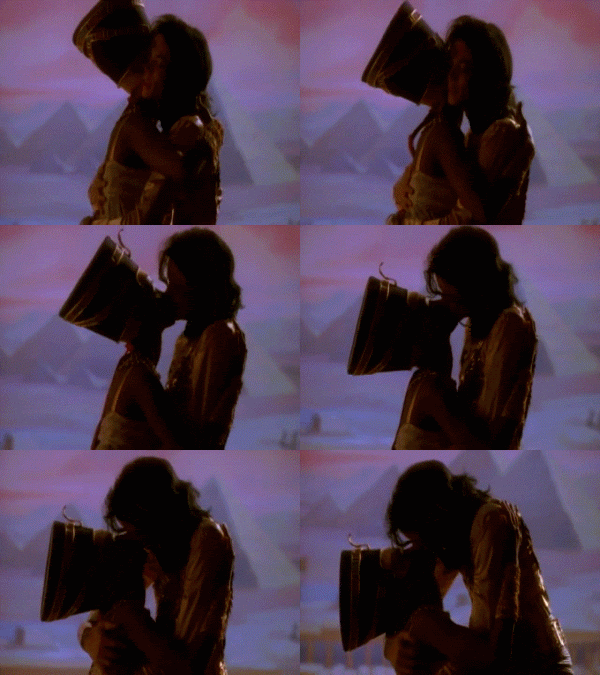
A classic R&B music video that had a more scandalous storyline, but still had meaningful lyrics was Michael Jackson’s “Remember the Time”. Boyz n the Hood director John Singleton, directed his first music video which was set in ancient Egypt and starred Eddie Murphy and supermodel Iman. Although Michael Jackson also serenaded someone else’s wife in the video, this video honored  Black people as rulers of ancient Egypt, the fight for love and an amazing dance sequence with both Black men and women of all shades. This video, in particular, reflects on the past of two lovers while still honoring the beauty of Black love and Blackness through the wardrobe selection and various skin tones of Black characters and dancers.

While many 90s artists brought us sexy and intimate love ballads, their music videos accompanied imagery that made you believe in Black love that was complicated, honest and sincere. While the videos discussed aren’t true to every relationship, these videos did portray a side of Black love and intimacy that wasn’t easily found in the typical raunchy Hip-Hop videos. R&B music videos were able to tastefully showcase all shades of Blackness that wasn’t necessarily misogynistic or overly provocative. However, it did showcase a variation of Black love and intimacy that took place in ordinary locations such as the subway, club or local coffee shop. A brotha would proclaim his love in the rain, or on the phone. A sistah would make a late night trip to her man’s crib or wake him up and sing to him in the early morning. Either way, watching and reminiscing on 90s R&B I’m sure one could find the perfect video that embodies and reflects how they feel about their Black love. — Adeerya J.


The Real World Prototype and Reality TV

The Real World Logo

As a network developed to provide a new platform for music’s developing stars, MTV changed the lives of countless young artists looking for a break into the industry. During the 90s, MTV featured shows that primarily emphasized music: Yo! MTV Raps, MTV Unplugged, Alternative Nation, Club MTV, and Total Request Live are several programs that linked the entertainers and fans together by giving the fans control over what content aired. MTV’s popularity anchored itself in the young viewership of teens and young adults between the ages of 18-25; the pride of the network centered around creating a space dedicated to youth popular culture and the decade’s hottest rappers, rockers, and pop stars.

MTV also designed programming that focused on broader topics, like MTV News, in an effort to round out its offerings. The network’s longest running series, MTV’s The Real World, highlighted the day-to-day lives of young people from various backgrounds living together in a predetermined city. The show’s introductory tagline became ubiquitous with its content, and viewers could always count on an explosive combination of personalities to fuel each season’s unpredictable episodes:

“This is the true story of seven strangers, picked to live in a house, work together, and have their lives taped. Find out what happens when people stop being polite and start getting real…”

For twenty-five years, young people from different geographic locations and with varying backgrounds came together in cities throughout the country for our viewing pleasure, making The Real World the first successful reality television show broadcasted in America.

The Real World was modeled after Beverly Hills 90210 and Melrose Place, as an alternative to major network soap operas targeting middle-aged women. Mary-Ellis Bunim and Jonathan Murray, the show’s creators, opted for the “reality” format of The Real World, because their budget didn’t allow for writers, set design, actors, etc. So, they decided to let the participants create the storyline. The show’s first season was set in New York City and filmed over a three-month period, with each cast member receiving $2,600 for appearing on the show. And in New York, things got really real (well, at least according to mainstream TV content in the 90s).

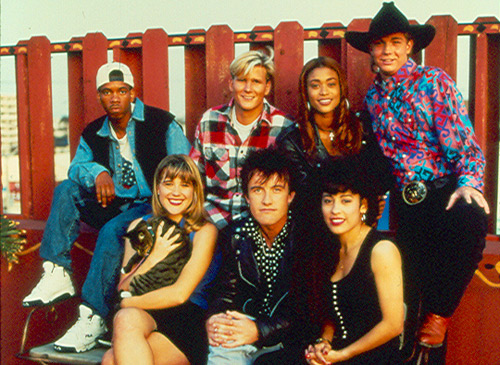
What later becomes typical behavior amongst The Real World castmates was exciting and fresh during its 1992 debut (and for a few seasons thereafter). The thirteen episodes of Season One show Becky, Kevin, Heather, Julie, Andre, Eric and Norman working through romance, sex, illness, familial relationships, and social issues. The roommates are divided by gender 3:4 (female-to-male), and 5:2 ethnically (with two African-American cast members). Race plays a factor is several episodes, with Kevin Powell leading many conversations that highlight divisions within the house. His (in)famous confrontation with roommate Julie Gentry demonstrates the organic manner in which controversy arose, making the episodes worth watching.

Norman Korpi, Andre Comeau, Julie Oliver, Rebecca Blasband, Heather B., Eric Nies and Kevin Powell of The Real World New York Cast (Photo by Ron Galella, Ltd./WireImage)

The abridged version of the confrontation goes as follows: Julie accused Kevin of threatening her with physical violence and spitting at her after she refused to let him use their house phone (remember: this show’s original airing predates cell phones and all things technologically mobile). He admitted to being upset with her but denied spitting at her. When Norman and Eric sided with Julie, Kevin pointed to race as the underpinning for Norman and Eric’s alignment with Julie, but Julie sited what she determined as Kevin’s past record of aggressive behavior as the justification for her sentiments. The parties later reached some type of amicable resolution, but this episode created a precedent later followed by other seasons, where not only race, but religion, gender, and sexual orientation often divided the castmates. The show’s best moments are those credited for opening up tough conversations among young people.

Future roommates, almost always from various upbringings and of different ethic backgrounds, would confront similar issues: race, gender discrimination, differences concerning sexual orientation, political beliefs, body image issues, and religion. In Season Two, The Real World: Los Angeles, castmates Tami Akbar (m. Roman, later star of VH1’s Basketball Wives) and David Edwards divide the house after what begins as a prank targeting Tami. The incident escalated to a physical confrontation between the cast members, ultimately resulting in the decision to remove David from the house.

The Real World may be credited as the pioneering reality television program, and its influence remains evident in various popular “reality” TV shows on various networks. While there’s a show out there for a number of interests—meant quite literally, as every network, from HGTV to The History Channel, offers some reality-based series— few strike more intrigue than those offering insight into Black culture. More specifically, many shows feature African-American women feigning friendships, chasing men, and digging into entrepreneurial endeavors. And no Black reality TV show is complete until an episode features a shade-throwing-, tea-spilling-, let-me-get-you-together-type confrontation. The entertainment factor is undeniable, though, as shows like Bravo’s The Real Housewives of Atlanta and VH1’s Love & Hip Hop have reached ratings as high as 4.3 and 3.8 million, respectively.

Bunim and Murray’s reality TV formula allowed for an organic plot-development (although film was edited to help establish a traceable storyline), and the issues the casts encountered mimicked situations relatable to the audience. As The Real World progressed, audiences criticized producers for what many perceived as scripted conflicts and contrived conversations. It seems, however, that recent reality TV shows are only popular if the drama is “too good to be true.”

Nonetheless, our favorite reality starlets are also feeling a little shade from their fanbases, too. Ratings for many shows reflect a decline in viewership over the years, and in an effort to remain relevant, many storylines have expanded far too far away from “reality” (Do they have to fight every week?). And more troubling, for some, is what’s frequently cited as a collective misrepresentation of Black woman and the threat of conveying a distasteful, inaccurate message to young Black girls about Black womanhood in America.

Because of a history of oppression, subservience, dispossession of the body, abuse, malicious sexual intrigue, and marginalization by American at-large, we may question if Black reality TV supports or disrupts the perpetual race- and gender-based pursuit of acknowledgement, acceptance, and encouragement of Black women (and other women of color) in society. Are these women our entertainers, role models, or stereotype perpetuators? —Shari Arnold


RHOA

LHHA Cast

References

<http://www.emmytvlegends.org/interviews/shows/real-world-the>

<http://www.usmagazine.com/entertainment/news/real-world-new-york-cast-reuniting-22-years-later-on-oprahs-show-20141712>

<https://lmarsh11.wordpress.com/tag/seven-strangers-picked-to-live-in-a-house/>

<http://www.theroot.com/articles/culture/2013/03/race_on_the_real_world_retro_mtv_and_social_issues.2.html>

<http://www.ibtimes.com/mtv-ratings-decline-raises-relevance-questions-young-people-cut-cable-cord-devices-1881468>

<http://allthingsrh.com/rhoa-ratings/>

<http://allhiphop.com/2015/05/08/is-love-hip-hop-languishing-in-ratings/>

Female Rap Royalty of the 90s

With the increased popularity of hip hop culture in the 1980s, it was only right that women took their rightful places at this musical table. Many female emcees, or rappers as they would come to be known, saw the 1990s as their opportunity at stardom. They felt that their messages were just as important as those of their male counterparts. From the legendary MC Lyte who rocked the late 80s into the early 90s to Ms. Lauryn Hill whose sultry voice bridged hip hop and r and b, female emcees of the 1990s were a force to be reckoned with. They enlightened the world about important issues such as the respect of women, female equality, sexism, and social injustices in the “hood”, while simultaneously displaying sensuality and sex appeal.

mc lyte

The dawn of the 90s broke with artists like Queen Latifah, YoYo, and Lady of Rage. They spoke out about how women should be treated, and the respect that they deserve as part of society and the rapidly growing hip hop genre. Latifah’s hit record “U.N.I.T.Y.” addressed sexism with lyrics like, ” I had my cutoff shorts on right cause it was crazy hot/ I walked past these dudes when they passed me/ One of ’em felt my booty, he was nasty/ I turned around red, somebody was catching the wrath/ Then the little one said (Yeah me b****) and laughed/ Since he was with his boys he tried to break fly/ Huh, I punched him dead in his eye and said “Who you calling a b****?”‘ (Genius). Lady of Rage let the world know that she ran things and wasn’t a punk or scared rather “[she] rock[s] rough and stuff with [her] Afro Puffs/ (Rage)/ Rock on, wit’ cha bad self.”

yoyoqueen latifah lady of rage


Although many of the first female emcees hailed from the northeast of the United States, in 1994 a young woman who would come to be known as Da Brat released her debut album that sold over a million copies making her the first female hip hop artist to go platinum (March). The mid-90s ushered in a much more liberated, coarse, raw era. The likes of Foxy Brown and Lil Kim opened the doorway for female hip hop artists to be as sexually and verbally explicit as their male counterparts. They addressed “street life” from the female perspective. From the hood beat of Kim’s chart toppers to the island vibe of Foxy’s club bangers, these female emcees publicly gave women permission to live life adulterated and unapologetically uncut as they spit lyrics only previously heard by men and dressed in a manner which left little to the imagination.

da brat

lil kim        foxy brown


As the new millennium approached, many more artists began to rise to power. Eve: First Lady of Ruff Ryders, Missy Elliott, and Lauryn Hill diverged in different directions as they diversified the hip hop genre. The rough around the edges, Philadelphia native, and only female member of the Ruff Ryders crew immediately came in marking her musical territory. Missy Elliott hailing from Portsmouth, VA arrived on the scene with her futuristic concepts and vivid musical metaphors. Finally, none other than Ms. Lauryn Hill only female member of the group The Fugees (Refugees) that spoke to social consciousness. Her warm, embracing voice and old school hip hop vibe allowed her to bridge the gap between genres and generations. Her debut solo album “The Miseducation of Lauryn Hill” earned her five Grammy awards at the 1999 awards show. Female emcees definitely made their mark on hip hop history and paved the way for artists on the future. –Nikkia Grant

eve 2missylauryn hill

Works Cited

Genius Media Group Inc. Genius. 2012. Web. 28 November 2015.      <http://genius.com/Queen-latifah-unity-lyrics>.

March, Chase. The History of Women in Hip Hop. 6 April 2013. Web. 20 November 2015. <http://chasemarch.com/2013/04/the-history-of-women-in-hip-hop.html>.


Kara Walker: Visualizing the Intersections of Race, Gender, and Sexuality

Kara Walker represents a new voice and new perspective that came of age in the 1990s that offered a new visual platform to explore the complexity of race, gender, and sexual exploitation. Her fame came quickly and at a young age. She became an “art star overnight.”[i] In 1994, Walker presented Gone: An Historical Romance of Civil War as it Occurred Between the Dusky Thighs of a Young Negress and Her Heart. The piece uses a Victorian era art medium of hand cutting paper silhouettes. While the medium is historical, her approach to the subject matter was not. Gone contains caricatures of slaves in sexual exploitative positions that highlight issues of miscegenation. In other words, these life size silhouettes (seen in the image below) show the lived and imagined realities of slavery in a size that cannot be ignored.

Gone: An Historical Romance of Civil War as it Occurred Between the Dusky Thighs of a Young Negress and Her Heart (1994)

Kara Walker reflects the changing approach to grappling with the complexity of the legacy of slavery. Hazma Walker (no relation), argues that Kara Walker is part of the generation that is both post-Civil Rights Era—and post-Roots (the television adaptation). Young artists may no longer feel they must “address slavery in a strictly reverential way.”[ii] In other words, coming of age in the 1990s offered new ways to explore intersections of race, sex, and gender that may still be offensive or at least uncomfortable to the older generation. I would argue they are meant to make you uncomfortable. Discomfort, or even a visceral reaction, should accompany an exploration of identity and the legacy of slavery often minimized in mainstream American society.

In 1997, at the age of 27, Kara Walker won a $190,000 “genius” grant from the MacArthur Foundation and became the second youngest person to ever earn the award. It came only three years after Walker had graduated from the Rhode Island School of Design and was met with controversy, especially within the African American artistic community.

An extreme example of the backlash can be seen from artist Betye Saar; the artist was in her early 70s at that time and began a letter-writing campaign petitioning curators to prevent her work from being shown. In the 1999 PBS documentary I’ll Make Me a World, she refers to Walker’s work as “‘revolting and negative and a form of betrayal to the slaves.’”[iii] Furthermore, Saar suggests that the younger artist’s use of racist stereotypes was betraying African-Americans “under the guise of art.”[iv] Saar admits she used caricature in her work, but argues that she was using it as a tool to reclaim and “recast” these images to give them power. The most noted example is her piece “The Liberation of Aunt Jemima,” which presents the title figure holding a broom in one hand–but a gun in the other. Therefore, Saar seems to be frustrated by the ambiguous nature of the characters. On the hand, writer Rhonda Stewart seems to emphasize that this “ambiguity” in Walker’s work is part of what makes it “thought-provoking.”[v]

front view of A Subtlety, or the Marvelous Sugar Baby (2014)
side view of A Subtlety, or the Marvelous Sugar Baby (2014)

Walker continues to take risks and repurpose old mediums. In this case, “elaborate medieval sugar sculptures displayed as symbols of kingly power at royal feasts.”[vi] In 2014, she built “a 35-foot-tall and 75-foot-long sphinx, [made] with 30 tons of white sugar,” entitled A Subtlety, or the Marvelous Sugar Baby (seen above).[vii] The sculpture was built at the former Domino Sugar refinery in the Williamsburg neighborhood of New York City. It was free and open to public. Writer Carol Kino described it as a “leonine body,…[and] like much of Walker’s work, built for controversy, with pendulous breasts, an Aunt Jemima–esque face and kerchief, a Kim Kardashian rump and a vulva so enormous one critic likened it to a temple entrance…[T]he installation was a monument to the slave labor that enabled sugar to become an everyday commodity.”[viii] It attracted 130,000 visitors and celebrities (including Beyoncé, Jay-Z and their daughter, Blue Ivy). The lines sometimes extended for eight blocks.[ix] Walker has now collected a body of work that can no longer be minimized due to her age or medium. —Ebony Gibson

[i] Kino, Carol. “Kara Walker’s Thought-Provoking Art.” Wall Street Journal. Nov. 5 2014.

[ii] Stewart, page 50.

[iii] Stewart, Rhonda. “Still Here: Artist Kara Walker in Black And White.” Crisis 111.1 (2004): 50.

[iv] Edgar, Allen B. “On the Cutting Edge or Over the Line? Kara Walker is Gifted, Angry, and Subjected to Criticism for Exploiting Racial Stereotypes in Her Art. The Main Resident is also Soft-Spoken and Unsettled by Her Own Success.” Boston Globe: 16. Dec 30 2001.

[v] Stewart, page 50.

[vi] Kino

[vii] Kino

[viii] Kino

[ix] Kino

love jones: Showcasing Black Love

While the early 1990s offered iconic hood films such as Boyz n the Hood (1991) and Menace II Society (1993), love jones (1997) offered something rarely seen in mainstream film—black love. The film is not a comedy. Not infused with hip hop. Love is examined, revered, and resented—but it is not minimalized. Furthermore, it offers unapologetic black sexuality shown with beauty and whit.

love jones movie poster

Roger Ebert’s opening to his film review highlights the unfortunate rarity of a film showcasing educated, middle class blacks. He explains, the film is “a love story set in the world of Chicago’s middle-class black artists and professionals–which is to say, it shows a world more unfamiliar to moviegoers than the far side of the moon.”[i] Although American television watchers received a glimpse of the black middle class with The Cosby Show (1984-1992), it was a comedy.

Furthermore, Cosby could offer the loving image of the Huxtable marriage, but the limits of the medium of television and family sitcom model prevent it from exploring black sexuality. There are limits to a love story that cannot show sex. Sex is a natural part of love. The film offers tasteful love scenes. It presents images of black sexuality that not only appear normal—but beautiful.

still from love jones

While most hood films centered on stark realism and nihilism, love jones offered symbolism and romance. Writer and director Theodore Witcher did this purposefully. He wanted to give the feel of “a modern Chicago version of the Harlem Renaissance.”[ii] He even distributed books about Renaissance artists such as Romare Bearden to the cast and crew.[iii]

It’s not difficult to see the influence of romanticized visions of 1920s salons with writers and artists debating esoteric topics. But how else do you create a platform to simply discuss love? Throughout the film, characters talk about the meaning of love. It is how we are introduced to Tate’s character Darius as he sits around with his friends in the Sanctuary (a spoken word venue) debating the meaning of love; Darius paints a metaphor of hope and possibility. Soon after he offers a sensual version of love in the spoken word piece “A Blues for Nina.” We also watch Darius and his only married friend Savon discuss the struggle to stay in love.

Ironically both Nia Long and Larenz Tate had major roles in the two iconic hood films mentioned earlier. Nia Long played Brandi, the love interest of the main character in Boyz n the Hood. Moreover, Tate played the infamous killer O-Dog in Menace II Society. Tate’s performance was so convincing that Witcher had to meet Tate in person to see the difference between the gangsta character and the actor.

And love jones continues to have an impact. Tate explains, “‘I get stopped at the airport by young folks telling me how much they love the movie and the actors and the music…It’s a one-of-a-kind film. And it’s still relevant. It’s about falling in love, and we’ve all done that…It’s not about people getting killed, just about people. Love is a universal story, Black or White.”[iv]  —Ebony Gibson

[i] Ebert, Roger. “Love Jones.” Rogerebert.com. March 14 1997.

[ii] Ebert

[iii] Poulson-Bryant, Scott. “Jonesing for Love Jones.” Ebony (October 2010): 100.

[iv] Poulson-Bryant, page 99.

BBD: Reinvention Showcases New Jack Swing and Brings Unexpected Success

Bell Biv Devoe (BBD) wasn’t expected to be successful. As members of New Edition, Ricky Bell, Michael Bivens, and Ronnie Devoe were there to round out a quartet. In 1990, they released the album Poison.  However, the trio was able to tap into the New Edition following that was largely around the age of 19 at that time. BBD’s success was largely due to capitalizing on this loyal following that enjoyed and embraced the raunchy sexuality that was a part of the audience’s lives—or at least their desires. BBD created hits such as “Poison” and “Do Me Baby” whose lyrics and videos are a part of the hip hop lexicon.

Poison album cover (1990)

New Edition is an ingrained part of black culture. They were the biggest boy band of the early 1980s. However, BBD became cultural icons in the 1990s. Some critics argue they even eclipsed New Edition’s success. The trio was no longer tied down to the suits and precision of the boy band quartet. They wore graffiti painted overalls, different color shoes, and tried new things just because they could. They had nothing to lose. They challenged the establishment. One example of this can be seen in the choice to defy the cultural standard of suits at 1991 American Music Awards. Nominated for four awards, BBD showed up in t-shirts and wore their jeans inside out. They walked away with two awards for Favorite Soul/R&B New Artists and Favorite Dance New Artist

BBD in painted coveralls

They were musically adventurous. Using Public Enemy producers Hank Shocklee, Keith Shocklee, and Eric “Vietnam” Sadler to produce much of their album created an edge to their sound. Spyda Man and Dr. Freeze were also instrumental (and their names are heard in the opening lyrics of “Poison.”) As the phrase goes, “Our music is hip hop smoothed out on an R&B tip with a Pop feel appeal to it.” While Teddy Riley had already coined the term “New Jack Swing” by 1987 in a Village Voice profile, it reached new levels of attention with Poison. Even 25 years after its release, the song (and album) are recognized for its impact. Music blogger Bandini pays homage in a February 2015 article: “…New Jack Swing’s wrecking ball made one of its biggest smashes with the release of Bell Biv DeVoe’s ‘Poison.’”[1]

In 1990, the Poison album was an unexpected success that eventually sold over 4 million copies. In 2012 radio interview, Michael Bivens explains that he is still able “to eat of that [album].” In other words, after more than 20 years, the album and its hits are still profitable in sells and the material is still popular enough for them to make a living touring.

The legacy of New Edition continues. BET is scheduled to release a biopic on the group in 2016. The three-part miniseries will be BET’s first scripted music-focused TV movie. TV producer Jesse Collins explains that “New Edition’s ‘music is woven into the fabric of our culture. When I brought the idea to BET years ago, I wanted to create a film that would tell the story of how New Edition emerged into one of the most important groups of its generation.’”[2]  —Ebony Gibson

[1] Bandini. “25 Years Ago Today, Bell Biv DeVoe Made A Poisonous, Everlasting Hit (Video).” Ambrosia for Heads. Feb. 24 2015

[2] Khatchatourian, Maane. “New Edition Biopic in Works as BET Miniseries.” Variety. Aug. 10 2015.

Because I am a man, I cannot love another man?

Invisable life book

“In a perfect world I would never have to write this letter. In a perfect world there wouldn’t be a need for it. In a perfect world this pain…absent. In a perfect world we would accept people whom and what they are. No Strings, complete honestly, total acceptance, no matter what. In this imperfect world we live in, there is no longer dignity in telling the truth.” Harris, Invisible life, 250

Shining a light on an issue that was hidden from view within the African American community, “Invisible Life”, written by E. Lynn Harris, depicts the life of its protagonist, Raymond Winston Tyler Jr., as he tries to cope with his sexual attraction to men. At first glance, Raymond is the epitome of what every woman would desire in a man; he is a successful Sports and Entertainment lawyer and is physically attractive. It is as the story unfolds that we learn that there are many sides to this complex character. In an effort to avoid judgement, Raymond is the epitome of a “DL brother” in African American society. Though he has sexual encounters with men, he continues to keep this part of his life quiet in order to avoid the hardships that come along with openly being gay. The reader sees a glimpse of this while getting his shoes shined in the Harts field International Airport, the shoe shiner, an African American female, converses with him about many African American males being “DL’, which causes Raymond to rethink his earlier desires of “coming out of the closet”. “The hatred in her face and voice bothered me deeply. The fact that she was black made my feelings more intense (Harris 15).

JL King on the downlow

The 1990s presented an elevated amount of AIDS/HIV cases which were initially thought to be connected directly to homosexual men and their sexual activities. African American men that were attracted to or desired to be with other men, had no other choice but to hide their true feelings and resort to hiding in the closet (becoming “down low”) in an attempt to refute the classification/associated with the stereotypical homosexuals. Many of these African American men, walk around us, exhibiting the looks of living, of what we would call, a “normal life” in order not to deal with aspects of discrimination and the stigma of being “gay”.

Though we live in an accepting world today, the phenomenon still exists. There are men that have secret sexual encounters with men but still continue to have relationships with women because of the appearance and comfortability it provides them. Being “out” and gay provides many hardships, including social exclusions in some communities that keep men in the closet. After all, who would want to be considered less of a man because of their sexual preference? Being straight in society is easy, being gay in society, is extremely judgmental and defiantly hard. Until we break the cycle and accept people for who they are, men will continue to live a lie and not their truth.

css.php