One of My Best Friends is Black: Representations of Blackness in 90s Cartoons
The 90s has been lauded as the greatest era of television, especially when it comes to representations of Black folks. Shows like The Cosby Show, The Fresh Prince of Bel-Air, Family Matters, and A Different World offered representations of black life that were relatable. But, while black sitcoms saturated daytime and primetime television, there seemed to be a void of children’s cartoon staring black characters. Black characters peppered the casts of mostly white 90s cartoons, making blackness visible even in animation. For my childhood, the most memorable shows that I still watch on occasion introduced black animated characters who were not merely background cast and sidekicks. In Nickelodeon’s Rugrats and Hey Arnold! and ABC’s Recess, their Black characters were not mere tokens of representation, but full-fledged, well-rounded depictions of animated Blackness.
Rugrats is one of Nickelodeon’s most recognizable cartoons, and arguably their best. The show revolved around the adventures babies Tommy Pickles, Chuckie, Phil, and Lil, and three-year-old Angelica Pickles, the spoiled toddler who often bullied and harassed her cousin and his three friends. In the second season of Rugrats, the show introduced another toddler, three-year-old Susie Carmichael. Susie’s vivacious personality immediately endears her to the babies. Set up as a foil to Angelica, Susie storms onto the scene ready champion the babies, herself, and even Ange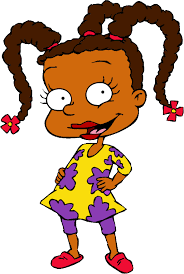 lica, when she needs one. She matches Angelica’s sass and outspokenness with more kindness, empathy, and caring. Susie’s constant support for the babies help them navigate and avoid pitfalls of their own making and those that Angelica ropes them into. Always willing to share her toys and her knowledge, Susie quickly becomes an important part of the babies and Angelica’s growth. Susie often succeeds in making Angelica see the error of her ways where others fail. Susie is everything Angelica is not, and everything the babies want to be.
Susie is a well-rounded toddler. She is smart as evidenced by her desire to be a doctor, which she immediately puts into action by “doctoring” the babies’ broken toys, and  even saving Angelica’s favorite doll despite Angelica’s dismissal of her talents. Susie is also tough. Not one to take Angelica’s bullying, Susie stands up for her by proving Angelica wrong and demanding an apology when necessary. Her talent for singing and dancing shine through in multiple episodes. With all of Susie’s positive and almost extraordinary characterization, the show doesn’t forget to humanize her or let her be a three-year-old. Susie is quick to apologize when she is wrong and unafraid to cry when she has had enough. And through it all Susie relies on her parents and three older siblings. Her mother is a doctor
 and her father writes for a popular kids show. They shows Susie the same kindness and patience she gives to the babies. In an episode where Susie’s older sister babysits Susie and the other babies, the
 relationship between Susie and her siblings. A close nit crew, the Carmichael kids always have eac
 h others backs. They encourage each other to be brave and encourage each other when things get tough. Susie is everything Black Girl Magic represents, and the representation little black girls needed.
While Rugrats served a fierce representation of Black girlhood, Nickelodeon’s Hey Arnold! and ABC’s Recessbrings Black boyhood to life in the characters of Gerald and Vince. Both shows follow the lives of a group of fourth grades friends as the navigate life in and out of school. Hey Arnold!is set an urban city and neighborhood life is virtually inseparable from school life. Hey Arnold!’s cast of prepubescent characters run the gambit of ethnicity and race. Recess is set in the suburbs and most of its action takes place at school during the titular recess period. While Hey Arnold! serves inner city realness, Recess takes a lighter touch to show the microcosm the students create that mirrors the adult world around them. The group of friends shirk the system to create an eclectic group that prizes friendship over cliques. Though Hey Arnold! premiered a year before Recess, the shows are very similar. The central friend group in Recessis led by fun-loving troublemaker, T.J. Detweiler and, Arnold Shortman acts as the unofficial leader of the neighborhood kids in Hey Arnold! In both shows, Gerald and Vince are the right-hands and best friends of their respective leaders.
In Hey Arnold!, Gerald Johanssen is the counterbalance to Arnold’s overly optimistic attitude. He often attempts to dissuade Arnold from jumping into situations without seeing were they might fail. While Gerald is more pessimistic than Arnold, he is a better judge of character as seen in the episode “Cool Jerk” when Arnold ignores Gerald’s warning about befriending and older boy who wants to use Arnold. Gerald saves Arnold from potentially life altering consequences of a bad decision to trust the wrong person. Aside from being street-smart, Gerald is the keeper of history for the neighborhood kids. Sid, one of the neighborhood kids, usually introduces the urban legends that Gerald then tells. Like Rugrats, Hey Arnold! makes sure to highlight Gerald’s family as well. The Johanssens are a close knit rambunctious nuclear family of five. Gerald’s mother works as a cashier and his father is a business man. Gerald has a typical relationship with his older brother, Jamie O, and his younger sister Timberly. Sandwiched between his two siblings, Gerald often finds himself at the mercy of Jamie O’s bullying and cleaning up his sister’s messes. In the episode “Gerald Moves Out,” Gerald leaves home but quickly realizes that even though his family annoys him he loves and needs them. Gerald brings style and flavor to Hey Arnold!.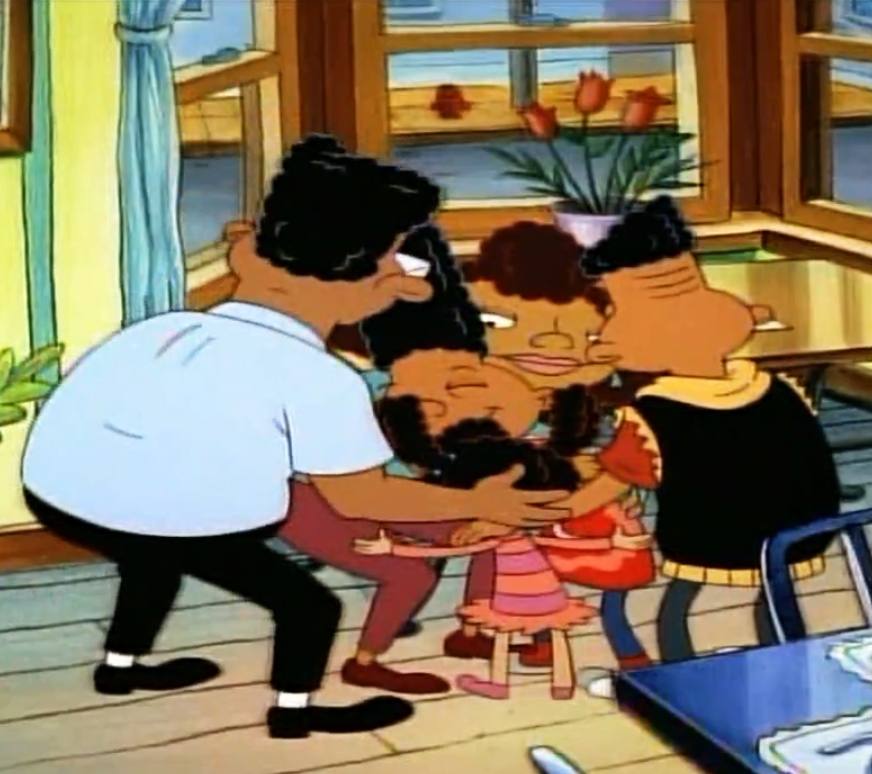
As a more lighthearted look at fourth grade life, Recess centers around the school and its hierarchy. T.J. often finds himself at odds with the established order with his group of friends by his side. Like Gerald, Vince usually tries to talk T.J. out of his ideas only to end up a part of them.  When Vince is not fighting against playground hierarchy with T.J. and the Gang, he is most often playing schoolyard sports. Vince’s athletic ability is legendary among the students. Vince never turns down a challenge and always wins, even when he is challenged t o make something edible out of the school’s lunch. Vince’s athletic superiority make him one of the school’s most popular and coolest kids. The only kid considered cooler than Vince is his older brother Chad. However, this is shaken when Vince comes to realize that Chad is actually a nerd in the episode “Big Brother Chad.” Vince worries that he too will become a nerd, but when Chad stands up to a bully on behalf of some younger students, Vince learns that there are different ways to be cool. His adoration of his brother and his friendship with the rest of the Gang proves he is able to look past school hierarchy and accept people as they come.
The similarities between Gerald and Vince are not hard to miss. Aside from both being fourth graders, they each wear jersey’s and are good at sports. They even rock the  same hairstyle even though Gerald’s fade stands quite a bit taller than Vince’s. Their popularity makes them leaders as they both serve as class presidents. Smart, athletic, and loyal, Gerald an
 d Vince give visibility to black boyhood just as Susie for black girlhood. Rugrats, Hey Arnold, and Recess were diverse shows that represented animated childhood across age ranges and demographics.
–– A. Latson


