“I Got A Love Jones”: Love Jones, 21 Years Later

“One truism in life, my friend…When that jones come down, it be a mothafucka.”- Savon Garrison
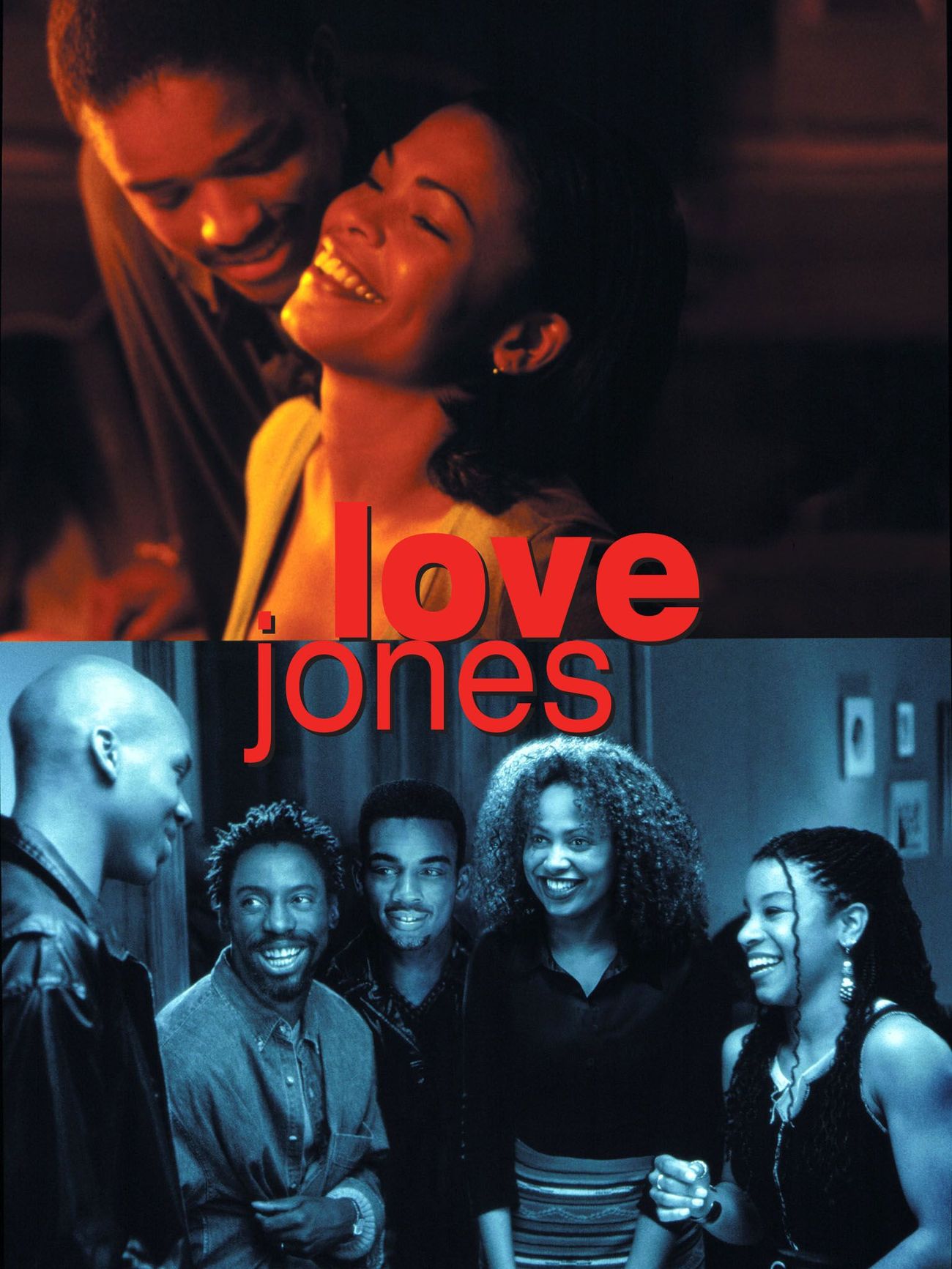
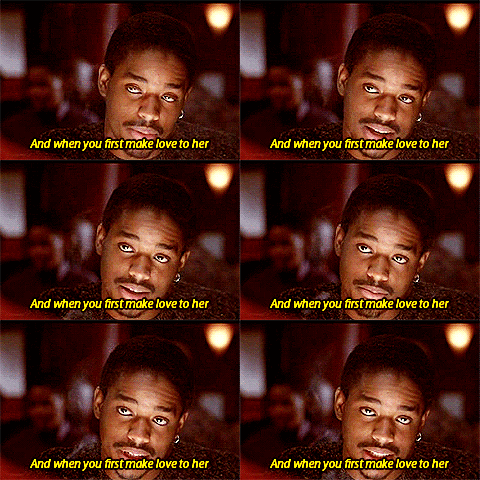
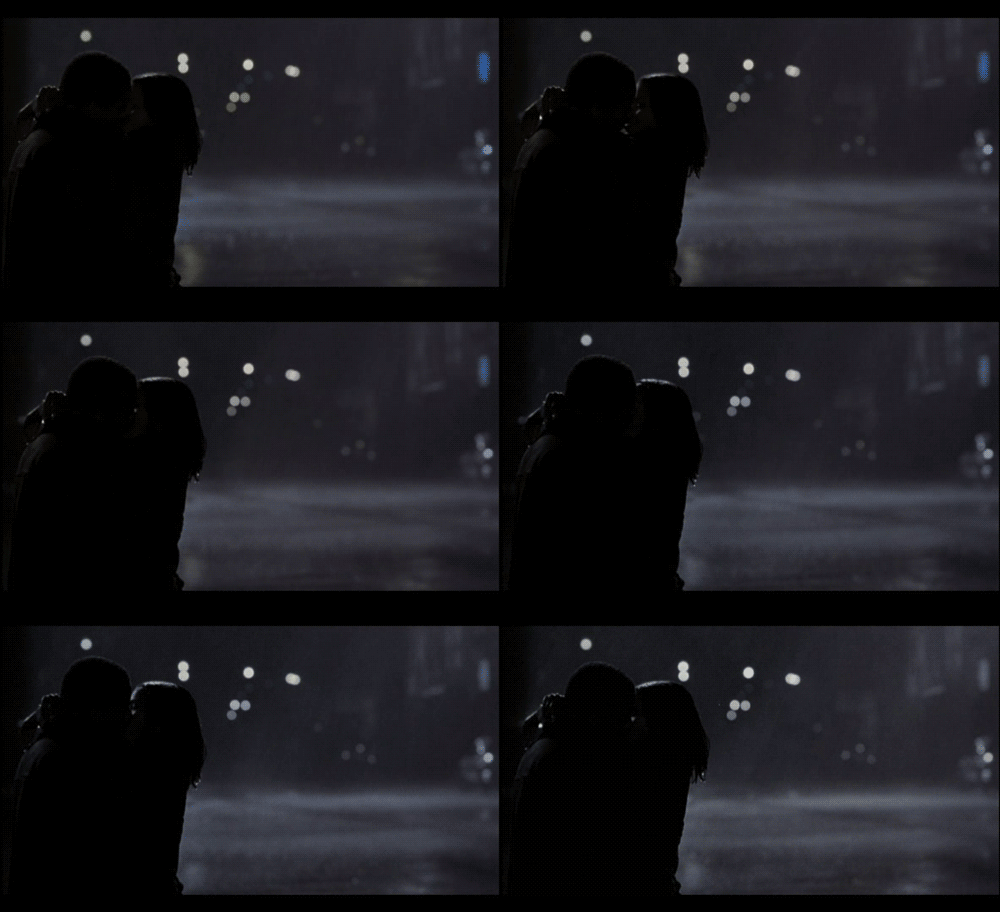
This line from the cult classic Love Jones is what best describes how this movie has influenced Black love and Black-romantic comedies twenty-one years since it’s opening on March 14, 1997. Love Jones premiered as a new twist and imagery of Black love and Blackness on cinema. The director, Theodore Witcher, a Chicago native, describes Nina and Darius as being a part of the “creative class”[i]. This class highlights a nuanced representation of Black people in the mid-90s who were college educated and were interested in the arts. Coming up behind classic hood movies such as Poetic Justice (1993), Friday (1995) and Juice (1992), Love Jones paved the way for writers and directors to create movies that highlighted Black people who were academically successful and in love.

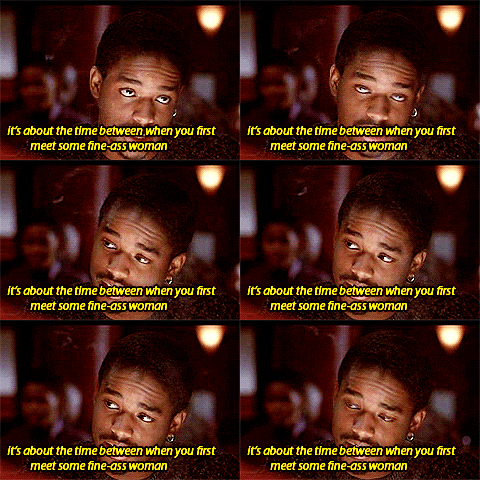
In 2017, the cast and crew of the film came together for the LA Time’s oral history conversation to honor the 20th anniversary of the film and to talk about the authenticity of the movie, the beauty of the soundtrack and the impact of Black love being caught on film. Coincidentally, the film was honored last year at the American Black Film Festival Awards and received the award for “Class Cinema Tribute”. The award and oral reflection proves that Love Jones is a classic film that transcends through Black cinematic history. While Love Jones provided its very nostalgic lines and scenes, Love Jones painted Black love and friendship in a way that was artistic and creative in nature. Julia Chasman, the executive producer of the film explained that the script presented the lives of young Black artist in Chicago that was normally seen in white movies [ii].

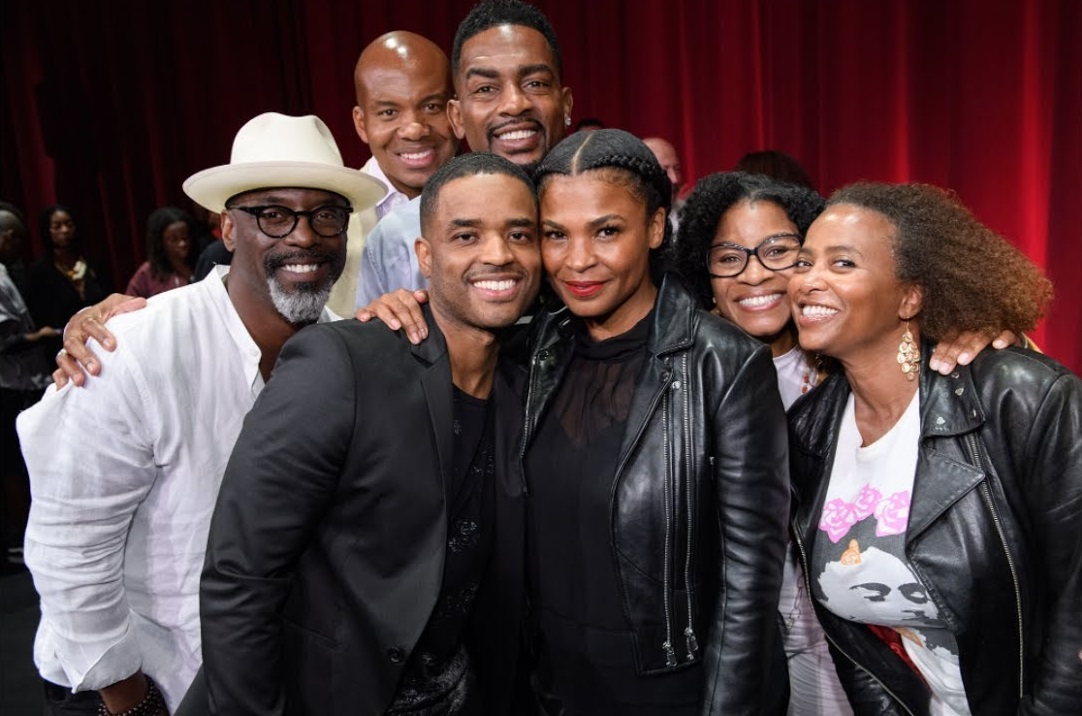
Because of Witcher’s simplicity in his attempts to create a romantic comedy that explored the relationship between two artists in Chicago, he was able to pair the movie with a phenomenal soundtrack. The Love Jones soundtrack was released four days before the film and peak at number three on the Billboard Top R&B/Hip-Hop Albums in 1997 [iii]. This soundtrack contained classics such as “The Sweetest Thing” by Lauryn Hill, “Sumthin’ Sumthin’” by Maxwell and “In a Sentimental Mood” by Duke Ellington and John Coltrane. The soundtrack has a mixture of iazz, neo-soul, R&B and poetry that reflects the artistic attraction that the film provides. The soundtrack actually prompted the studio to re-release of Love Jones five months after its debut in theatres because people loved the soundtrack so much [iv].

Although the film didn’t do spectacularly at the box office, Love Jones put two actors together that showed a dynamic depiction of Black love and sexuality that was liberating and visually stunning. Ironically, both Nia Long and Larenz Tate were not Witcher’s first choice, but New Line Studios suggested Tate and one of the executive directors suggested Long [v]. After a few meets and readings, the chemistry between Tate and Long proved that they were best for the part. Nia Long said; “I honestly felt like our chemistry was the best. It felt amazing and it felt right, and we looked good together and it looked believable.” [vi]
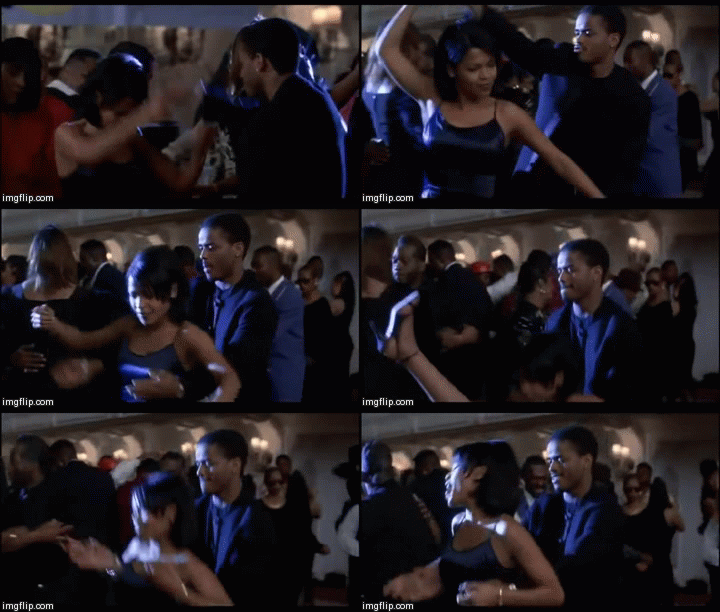
Love Jones presented viewers a new image of Black love on screen that showed two Black people who were young intellectuals who had a carefree way of loving each other. I believe that the cast would agree that Love Jones was definitely a movie before it’s time. However, over time, the movie became one to be appreciated due to is jazz undertones, references to Gordon Parks, the bond with poetry and spoken word in urban Chicago. This movie paved the way for more narratives of middle-class Black love in similar movies such as The Best Man, Love & Basketball, and Brown Sugar. So, thank you Love Jones for being a movie that I can laugh to, cry and fall in love with for 21 years and 21 more years to come. And that’s urgent like a muthafucka.  —Adeerya J.
Citations

[i]http://www.latimes.com/entertainment/movies/la-et-mn-love-jones-oral-history-20170313-htmlstory.html

[ii]https://www.villagevoice.com/2018/02/12/theodore-witcher-talks-love-jones-21-years-later-and-why-he-hasnt-made-a-follow-up/

[iii] ibid.

[iv] ibid.

[v] ibid.

[vi] ibid.


So Anxious: Black Love & Intimacy in Black R&B Music Videos


What does Black love feel like?

Many of us have grown up listening to sultry sexy artist like D’Angelo, Jodeci, Janet Jackson, Sade, Ginuwine and SWV. These are just a few of many R&B artists that have provided the perfect soundtrack to serenade your lover. If you had the perfect night in with your lover, D’Angelo’s “Brown Sugar” or Monica’s “Angel of Mine” probably set the mood and help the one you loved most understand and sense what you were feeling. However, one important aspect of these artists and their passionate love songs is how the artist and director were both able to create an intimate imagery of Black love and sexuality that was nostalgic and beautiful.

What does Black love look like?

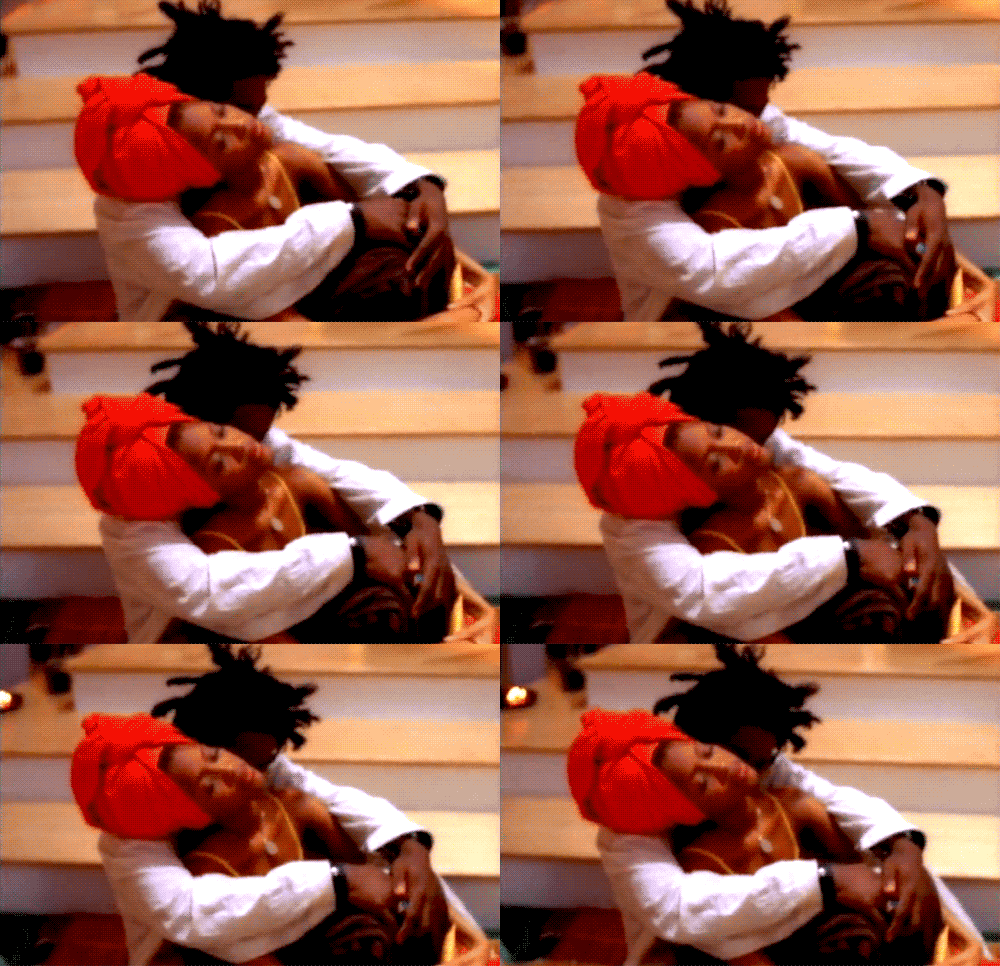
If I had to decide, to me it looks like Erykah Badu and Andre 3000 in her 1997 song “Otherside of the Game”. Erykah describes the commitment and love she has for her Black man and the things she goes through as the girlfriend of a drug dealer. In the video, you see a pregnant Erykah and a busy Andre 3000 co-existing in their loft starting their day. Importantly, this song provides an iconic soundtrack to what they are experiencing that morning along with showcasing their love as she wakes Andre up, they play fight, he caresses her belly and holds her tight as they embrace. This video provides an everydayness of waking up together and loving each other where others who watch the video can resonate with.

I also think in Joe’s video, “All The Things Your Man Wont Do”, there is sex appeal and curiosity between him and his lover.  In the beginning, you see Joe confessing his love to a woman on a pay phone and telling her that she deserves better.

This inevitably leads him to make an appearance at her job where he continues to serenade her and convince this Black woman that he possesses qualities that her current boyfriend does not. Throughout the video, the director creates a late-night mood and intimacy that is shared between the two. This is seen in the way the young woman flirts with Joe in the restaurant and making the ultimate sacrifice to take a chance with a better man

How far will Black love go?

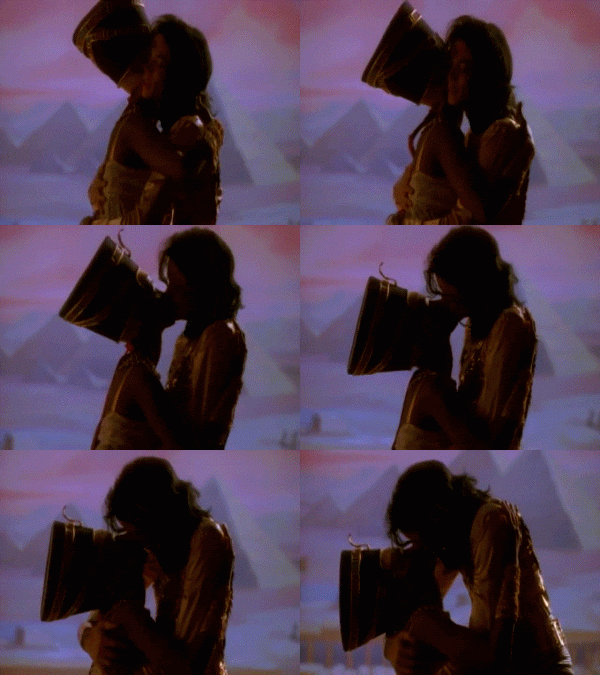
A classic R&B music video that had a more scandalous storyline, but still had meaningful lyrics was Michael Jackson’s “Remember the Time”. Boyz n the Hood director John Singleton, directed his first music video which was set in ancient Egypt and starred Eddie Murphy and supermodel Iman. Although Michael Jackson also serenaded someone else’s wife in the video, this video honored  Black people as rulers of ancient Egypt, the fight for love and an amazing dance sequence with both Black men and women of all shades. This video, in particular, reflects on the past of two lovers while still honoring the beauty of Black love and Blackness through the wardrobe selection and various skin tones of Black characters and dancers.

While many 90s artists brought us sexy and intimate love ballads, their music videos accompanied imagery that made you believe in Black love that was complicated, honest and sincere. While the videos discussed aren’t true to every relationship, these videos did portray a side of Black love and intimacy that wasn’t easily found in the typical raunchy Hip-Hop videos. R&B music videos were able to tastefully showcase all shades of Blackness that wasn’t necessarily misogynistic or overly provocative. However, it did showcase a variation of Black love and intimacy that took place in ordinary locations such as the subway, club or local coffee shop. A brotha would proclaim his love in the rain, or on the phone. A sistah would make a late night trip to her man’s crib or wake him up and sing to him in the early morning. Either way, watching and reminiscing on 90s R&B I’m sure one could find the perfect video that embodies and reflects how they feel about their Black love. — Adeerya J.


“Do the Bankhead Bounce”: Classic Cookout Dances of the 90s

When I think about my summers in Atlanta, I think about going to various cookouts my parents used to take me and my sister to when we were younger. They were either their close friends or co-workers who always welcomed my family with great BBQ, fun games and plenty of music and dancing. It’s amazing that Black people possess the creativity and dancing skills that shape dance culture in the Hip-Hop world. Some of my favorite dances came from the 90s, especially memories of having booty shaking (aka twerking) battles with my friends at summer camp and trying to do the Tootsee Roll on roller skates.

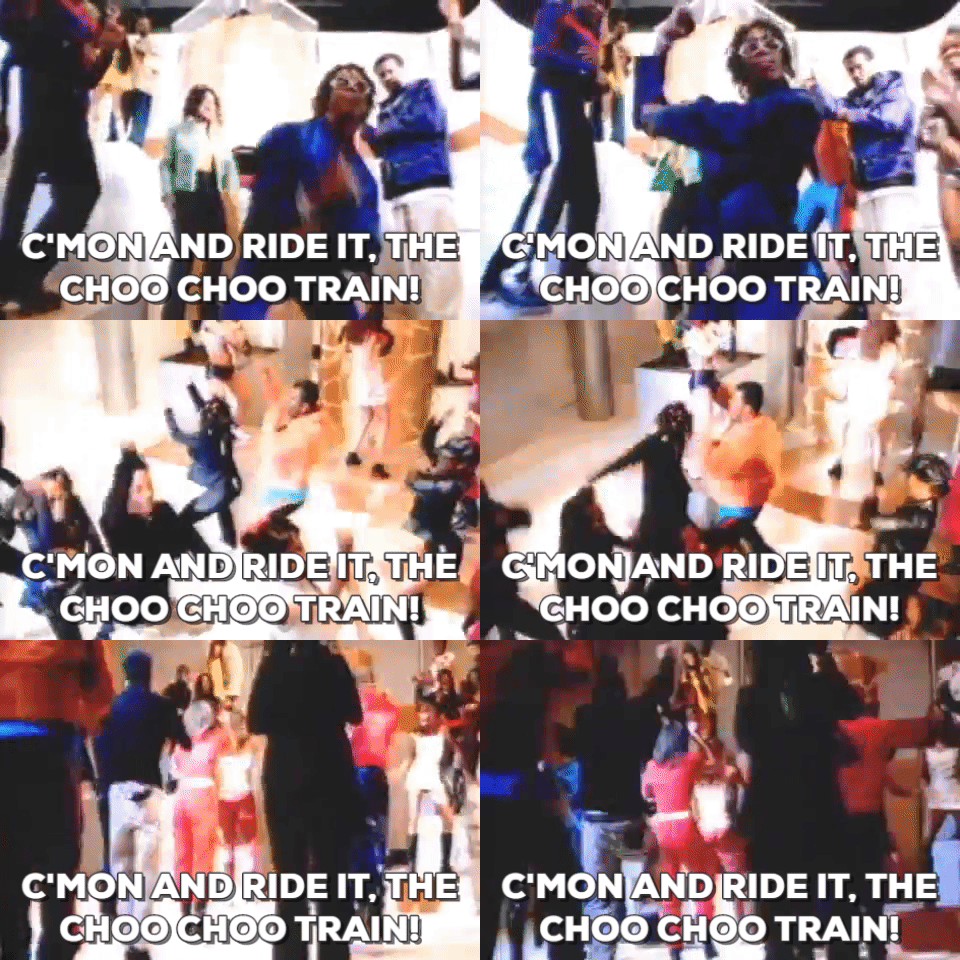
I’ve always had a love for dancing, so when my favorite song, “C’mon N’ Ride It” by the Quad City DJ’s came on at the cookouts I was ready to show out. I would begin to bounce my shoulders, roll my arms and rock side-to-side in a rhythmic fashion and proceed to ride the train. This dance was closely similar to the popular Southwest Atlanta dance, the Bankhead Bounce originating in the Bankhead neighborhood. The original song that the Bankhead Bonce originated from was performed by an Atlanta rapper named Diamond and featured D-Roc in 1996 [i]. This dance required a rapid shoulder bounce with hands and fist bouncing in front of you from side to side. This dance could have been performed to any southern Hip-Hop song such as A-Town Players, “Wassup Wassup”, 95 South’s “Whoot! There It Is” and TLC’s Waterfalls, which they performed in their music video in 1995 [ii].

Most of my early summers were spent at my local Boys and Girls Club. I had a cool group of girlfriends who were always down to dance. So, when one of the camp counselors brought in their mix city with the latest Hip-Hop songs we would rush to the boom box and dance till our moms came to pick us up. A classic was the 69 Boyz, “Tootsee Roll” which actually peaked at the number one spot on the Billboard Hot 100 Rap chart and number eight on the Billboard Hot 100 in 1994 [iii]. This dance was a more inverted funky chicken, which one would wind their knees inward while doing a dip. We also enjoyed the butterfly—similar to the Tootsee Roll, Da Dip by Freak Nasty and any other song that provided us instructions to shake our hips or drop it low.

As a young Black girl, I wasn’t aware of why I was shaking my butt at the young age of eight but similar to the women who were getting’ down at Freaknik or Black Bike Week it was a fun dance to do and you couldn’t resist the beat of the music. Growing up in the era of 2 Live Crew and Uncle Luke, or hearing songs that tell you to “Back that azz up” it’s a dance move that’s hard to refuse. When me and my friends or cousins got together at a family cookout hearing Juvenile’s “Back That Azz Up” really took over for the ’99 and the ’00. With its sexually explicit lyrics demanding listeners to back their ass up on the rapper himself, this song defiantly is a cultural favorite and can still be heard on your local HBCU campus and neighborhood cookouts.

The beauty about Hip-Hop is that it has the ability to make listeners feel good and bring people together to have a good time. I have many great memories as I reflect on the times when I used to dance to these songs. Now that I’m older the songs and the dances are quite nostalgic and take me to a place where I remember eating saucy ribs and burgers, smelling hot links on the grill, and bouncy houses in the backyard. Importantly, these dances are still remembered today and when played at parties or clubs now, me and my girls will still get low and do the Tootsee Roll and twerk to Uncle Luke’s “Cap D Comin’”. I just hope that this new generation of Hip-Hop dances continues to provide the same nostalgic memories and blissful feelings that we all grew up with in the 90s. —Adeerya J.

Citations

[i]https://en.wikipedia.org/wiki/Bankhead_Bounce

[ii] https://en.wikipedia.org/wiki/95_South

[iii]https://en.wikipedia.org/wiki/Tootsee_Roll


Sister, Sister: Sisterhood & Womanism in the 90s

Womanism: “Also: A woman who loves other women, sexually and/or nonsexually. Appreciates and prefers women’s culture, women’s emotional flexibility (values tears as natural counterbalance of laughter), and women’s strength. Sometimes loves individual men, sexually and/or nonsexually. Committed to survival and wholeness of entire people, male and female. Not a separatist, except periodically, for health.”[1]

Alice Walker     

A close friend told me being a Black woman is like being in a secret club of magic, sisterhood and friendship. Reflecting on Black women’s friendship and sisterhood on television and movies in the 90s, I, similarly see a consistent theme of support, unconditional love and acceptance.  These themes can be aligned to how Alice Walker describes a Black feminist in her definition of Womanism. Walker describes Womanism as young girl as “girlish” or  “womanish” or a black feminist or feminist of color. I find her description of Womanism as a means to provide a specific exploration into the lives of Black womanhood.

 I look specifically to Walker’s second definition because it captures the essence of the 90s Black woman who aims to take on the responsibility to be in charge of herself and to question the world around her. I reference how this can be explored in the hit show Living Single and the hit movie and book Waiting to Exhale. I utilize Walker’s second definition to explore how these women embody the spirit of being a womanist through the ways their characters interact with each other and how they stand alone as independent Black women loving and living in the 90s.

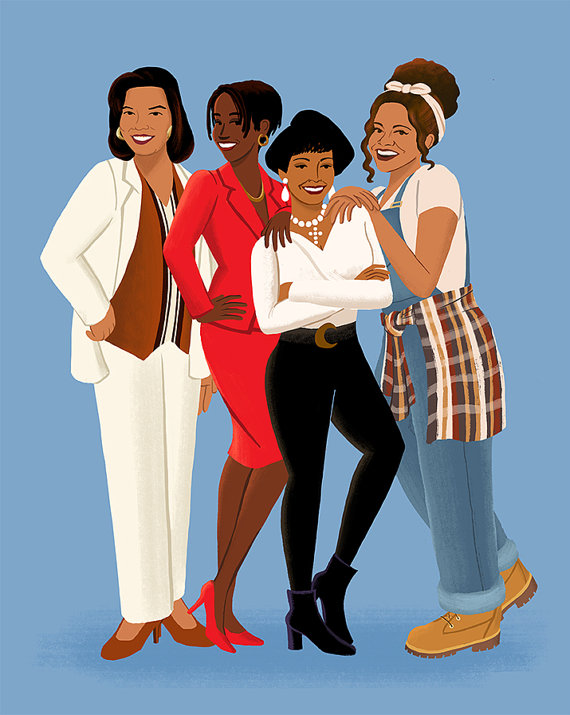
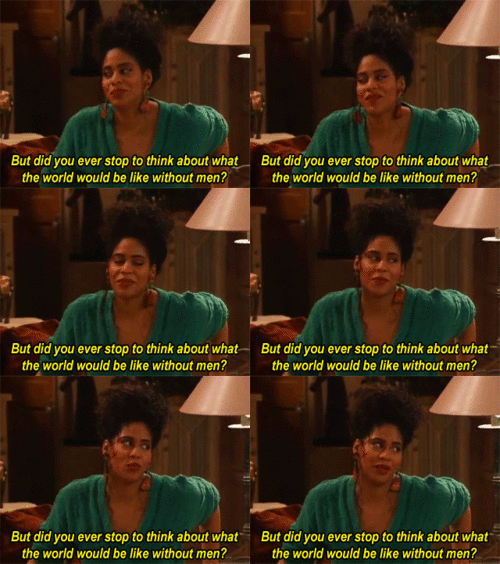
Looking at the lives of Khadijah James, Synclaire James, Regina Hunter and Maxine Shaw, Living Single explores the lives of four independent Black women in New York City. This show captures the “everydayness” of single Black women in New York who validated each other, dealt with love and relationships and enjoying each other’s company.

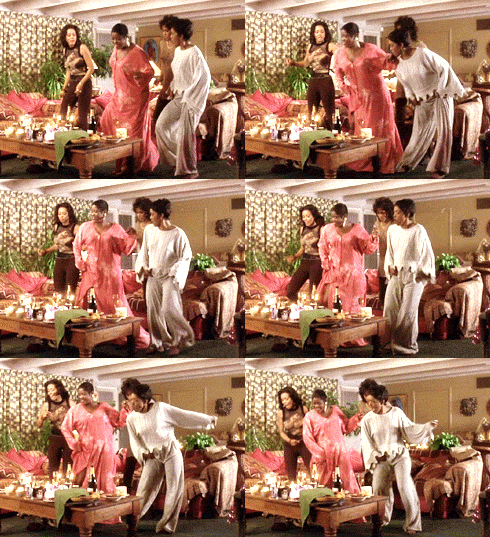
With each woman having their own characteristics and identities, each woman on the show had an important role in each other’s lives. Khadijah and Regina were childhood friends who supported each other when things got tough. This support and commitment were also fluid in Khadijah and Synclaire’s relationship as cousins who she employed at her own Hip-Hop magazine called “Flava”.

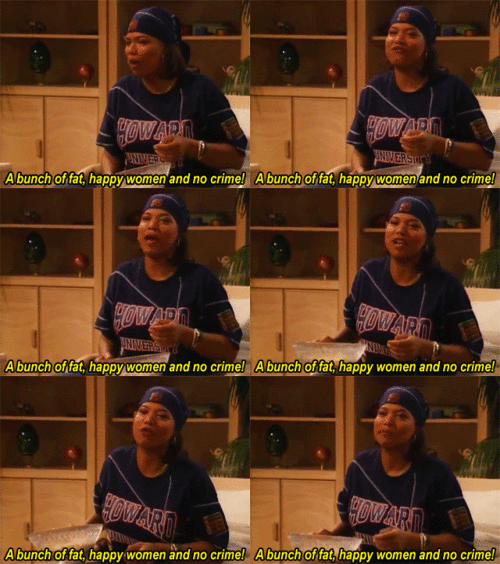
Maxie and Khadijah were college friends from Howard University and Maxie seemed to always be the advocate for strong independent Black women amongst her friends. Their friendship supports Walker’s definition because of the characters emotional flexibility, their commitment to women’s empowerment and their tough bond as friends that were seamlessly interconnected, through the best and worst of times.

Walker does a great job discussing the emotional and spiritual effort that goes into being a Womanist. Walker explains how Womanist appreciates women’s culture, loves women sexually and non-sexually and values a woman’s strength and weaknesses[2]. This is where the women in Terry McMillian’s Waiting to Exhale fit this definition. Savannah Jackson, Bernadine Harris, Robin Stokes and Gloria Matthews experienced tough trials of love, life and men. Through their experiences, the women supported each other through it all. There were words of affirmation and emotional support that showed people like Bernadine who was going through a terrible divorce that her friends were by her side.

I see Walker’s womanism as describing the social interactions, spiritual activism and critical thought that Black women do to uplift all people regardless of sexuality or gender. I understand this definition as a way to look at Black women’s liberation and healing of the self. Specifically, acting “womanish” seems to be a central theme in Waiting to Exhale. The four women were searching for answers to love, family and womanhood which is where I found the connection with Walker’s definition. This can be seen in Robin’s way of how she seemed to date the wrong men, but tried to see the best in them because she had love to give. Walker added the importance that a Womanist was not a separatist, but only in the occasion that Black woman in the 90s needs to repair her health. Gloria symbolizes the friend who represented self-care as a hairstylist and made sure her friends were always taking care of themselves, even if she didn’t want to do the big chop on Bernadine.

Furthermore, the importance of Walker’s definition and the analysis of  Black woman’s thoughts and feelings will better aid to the mental and emotional health and well-being where the Black woman can adequately take care of others and themselves in shows like Living Single and Waiting to Exhale. The womanist identity and the importance of Black women’s “everydayness” in the 90s was significant, interesting and relevant to highlighting the ugly and the beautiful of what it means to be a Black woman. These women work on coming into their own and being Black adult women who may not have it all figured out. But with the power of resilience, self-love and love for each other, the magnitude and power of their friendship kept them moving forward. — Adeerya J.

Citations

[1]Walker, A. (2006). Womanist. In L. Phillips, The Womanist Reader (p. 19). New York: Routledge.

[2]ibid.


css.php