The Archive

Pass the Blunt

Weed

“WHAT?!! Pass the Blunt?”….Soooo why do you smoke cause I don’t…don’t get it?

-June 17, 1999 at 6:25pm-
Now what I am about to say may cause some people to form a certain view about me and maybe not respect my opinion…but please note that this is only my opinion! I just do not get the concept of smoking weed. I have heard others say that it’s for enjoyment purposes only…and I have heard other weed heads say, that it’s a need. I personally think that it is a mechanism that can be used to keep the “have nots” to stay in their lower economic class and not to progress.

Through my educational endeavors, I have discovered that “others” view African Americans, as well as Hispanics, as inferior by falling victim to certain “unseen mechanisms”. I feel that weed is a part of these forces and are placed in individuals hands to keep them grounded. Now come on, what drug has the same damaging effects that weed has? I mean it can stop you from climbing the economic ladder. “Weed heads” usually use the concept that “it’s just like any other substance like alcohol and cigarettes”…but those are ALL legal.

My brothers and sistahs are so quick to speak about smoking “dro” or “ching chong” in music videos and in the street, but they will turn around and wonder why they are not getting hired. Others use the drug as a sedative for when they get stressed or find themselves under extreme amounts of pressure, but to these individuals I ask…are there any other “legal” avenues of expression and or relief that can be utilized that would not cause you to loose your livelihood?

This is only my opinion for I welcome yours.

-My thoughts today in 2015!-
As I look back to where I was 6 years ago mentally, I must say that I am amazed at what I wrote. Though I shared some of the same sentiments that I expressed above, I will say that acquired age, academic pursuits and experience has elevated my thinking on the topic. I have dated someone who was indeed a weed head, they lived to be high. That experience caused me to write the previous piece, thus causing me to feel like people only did the drug for recreation purposes, but love made me take an alternative view on the topic. After an argument, my partner disclosed that, the only reason they smoke was more than for recreational purposes; but for relief of from chronic headaches. Living in the days of unconventional modes of medicine, weed is now seen as an oasis in the storm: an avenue of relief for pain. It’s easy for people to judge accused weedheads and thugs based upon a “rough” exterior. But what if they had an illness that only weed could cure. The 1990s brought the use of weed to the forefront, the present has brought weed into the avenue of conventional medicine. Weed may not be so bad after all, but it damn sure is still not for me!!

Do your pants hang low?

Sagging pants

So it is my first day of 7th grade (1997) and I am trying to figure out the best “fit” to wear. In the hopes of being cool, I decided that my “code” (dress code) needed to be different than it was the previous year. This year, I have decided to sagg like the rest of my male counterparts. I look through my closet and ensure that the jeans that I pick, will be just as big and as baggy in order to ensure they sagg just right. I accompany my jeans with my polo shirt, and timbs (timberlands), and proceeded out the door. Right before my foot hit the pavement, my grandmother yells “bring yo red ass back into dis house and pull up dem damn pants. No Grandson of mine is going to be owt there in da streets lookin like a fool wit does damn paints down under their ass”. Just to appease her, I rushed back into my room and temporarily pull up and restrain my paints with a belt. With my freedom being obtained through compliance, I escape her grasp and make my way to the bus stop. Before I hit the corner, I quickly adjust my “altered” appearance to its original stance and proceeded on my way. Things were going good and I finally felt “accepted” by my male counterparts and then…..it happened…someone ruined my moment by coming behind me and pulling my pants down to the ground and thus exposed my boxers. When I turned around to “check” whom had did it, I discovered that it was indeed my mother, cussing me out for having my pants so low. “If you wanted to show yo ass, then you shouldn’t mine me pulling them down all the way so that they can see everything”. Though this was the most embarrassing day of my life, it made me not want to ever sagg again because of the fear that my mother may be close by.

When I was a little order, I learned that the phenomenon was once a unspoken signal that denotes sexual availability by inmates in prison, but has been converted into an urban fashion statement. The 90s enlisted the perception that doing it promotes a statement of “hoodness” and the more fly you sag, the “more bitches” you get supposedly. African American youth have once again adopted something else that started out so negative and ushered it into popular urban culture. Youth try so hard to emulate the famous, while the famous try to emulate their muse. In the African American Community, rappers try to emulate thugs. Thugs are housed in the jails and therefore, sagging has and will continue to thrive.

You attend an HBCU? What is that?!

HBCU 101

Unlike any other decade, the 1990s saw an influx of African Americans in pursuit of a higher education beyond the walls of their local High School. While many African Americans found it easier to enroll at a local colleges and universities, others (either forced or desired) to attend an historic black college and university. Parents of entering freshman, took pride in sending their children to HBCUs, once established to educate African Americans in a time where other white institutions wouldn’t. Once students arrived to the HBCU, educators and staff (whom were possible alums of that or other HBCUs) instilled a since of pride and understanding to their students about their “new home”. HBCUs in the 90s were a small knit family of their own and provided a since of community in a time where racial profiling and racism was dominant within the United States. But where does this since of pride come from and why is it important?

When African Americans were freed from slavery, many desired the opportunity to obtain a degree along side their white counterparts. In an attempt to deter their educational efforts, African Americans were initially not allowed to attend public/predominately white institutions in their surrounding areas. This inspired African Americans “to find a way or make one” by establishing their own institutions in order to service their communities. Many institutions were founded and even sometimes funded by religious institutions such as churches, while others received funding from individuals against collegiate segregation. When segregation was defeated at the collegiate level, and students were finally allowed the opportunity to attend wherever they choose, many abandoned “the traditions”, in hopes of getting a more “streamlined” and “respected” education, while others kept the tradition alive.

Having the opportunity to have attended both, I now have a unique perspective. Though I am grateful for having the opportunity of attending a PWI (Public White Institution) for undergrad, I am eternal grateful and have inherited a since of pride to have attended the FIRST Graduate institution for African Americans, The Clark Atlanta University. The relationships established at CAU are like no other from a communal experience to even a Greek/fraternal experience. HBCU life forms everlasting bonds between its students, teachers and administrators which are sometimes absent at PWIs. At the University of Central Florida, I felt as if I was a number, at CAU, I feel like I am a member of a family. Not saying that all professors at PWIs are like this, but I can’t begin to count on one hand how many professors have made an impact on my academic career at CAU.

HBCU Alum

What is love?

Poetic Justice

With the 1990’s ushering in the era of “hood” films, African Americans finally received an opportunity to tell their stories the way they lived it. Many saw this as an achievement, while others saw it as a misrepresentation of the race, by exploiting our issues. One of these areas heavily depicted was “love and relationships”, with many critics suggesting the exploitation of African American women. Films such as “Boys n da Hood” and “Don’t be a Menace”, not only came from the African American male’s perspective, but exhibited women as “bitches”, “hoes” and objects of sexual desire. Beyond the Nefertiti emblems, tight jeans, cut off shirts, updos and long braids, African American women demanded that they be portrayed not only as sexy, but as strong and independent.

With the “strong black women’s” movement of the 90s heavily underway, several films attempted to earn their respect by depicting the “female perspective” of daily life in the hood. Many film critics credit the rawness of John Singleton’s film “Poetic Justice”, as being the most representative of the African America female perspective. Many women could relate to how Justice had to cope with losing her boyfriend to the violence of the streets, her battle with depression and her ability to find love again.

So what was love like for African American men and women during the 1990’s? My response, is “hard and dangerous”! Films such as “Poetic Justice” provided audiences an accurate perspective of why love was harder to obtain from a women’s perspective. At a time when African American men were dying at the hands of gang violence and street life, African American women had to become hard, emotionless and even sometimes heartless in order to protect themselves. Love and the desire of relationships was a fairy-tale and even seen overall as a weakness to African American women. Unlike the present, where the requirements have become relaxed, African American women had to safeguard their hearts and block out the emotions in order to be successful and even survive. And for the men that did have hope, they either had to combat the pain and insecurities that were inherited by previous relationships, or had to be taught how to love.

Beloved: Reconciliation and Re-memory


Beloved. The Pulitzer Prize winning novel by Toni Morrison, inspired by runaway slave Margaret Garner, tells the story of Sethe, a runaway slave that kills her daughter to save her from being taken into slavery. Years after Sethe pays the price for her crime, a mysterious girl, Beloved, comes to stay with Sethe, her daughter Denver, and her lover Paul D. Upon Beloved’s arrival, her new family feels content and for the first time, happy. Yet, as Beloved’s stay is extended, Denver and Paul D suspect that she is not who she appears to be and for Sethe, Beloved forces her to reconcile her past in order to survive the present.

Although Beloved was published in 1987, the novel had a significant impact on the 90s. The novel helped catapult Morrison into the mainstream and depicted a story of slavery that had not been previously told before. Beloved takes on the complex idea of re-memory and reconciliation. Throughout the novel characters experience re-memory (or what many just believe to be “remembering”) and attempt to reconcile the memories of the past. Sethe and Paul try to keep their slave experiences locked away, yet have to eventually face them head on. Interestingly, while Sethe fights to keep re-memory at bay, Beloved cannot recall her past. The longer Beloved stays Sethe relives more of her past. It is not until Sethe lets go of the past that Beloved disappears and she is allowed to heal.

The idea of re-memory in the novel provides context to the black experience in the 90s and presently. Tricia Rose’s Black Noise (1994) and Paul Gilroy’s The Black Atlantic (1993) both hypothesize that black people are disenfranchised and frustrated because they are still dealing with the lasting effects of slavery. In turn, blacks turn to music or other forms of expression to reconcile slavery’s effects. According to Rose and Gilroy, re-memory permeates rap, movies, texts, and in general, black culture. Essentially, black people are facing re-memory and we won’t be able to move on until we reconcile our past. The question is: how can we escape re-memory or are we destined to stay in its grasps? What has to “disappear” in order for black people to move on?

Beloved also shocks, incites, and questions humanity. Sethe firmly believes that she is justified in killing her baby and sees it as a side effect of slavery. Slavery made Sethe into the monster the others believed her to be. Slavery created a desperate mother that did not want her children to endure the agonizing injustices of slavery. Slavery forced a mother to make a gut-wrenching decision: she would rather her children die than be enslaved.

Slavery’s effects were seen in the 90s and even today. Going back to scholars Rose and Gilroy, black people are facing decisions and creating art that perpetuates those effects. There is the realization that slavery inflicted more damaging effects that probably were not even conceived of. It is no wonder why Sethe struggles to reconcile her actions and even her life. By the end of the novel, Beloved becomes imposing, dangerous, restrictive, and burdensome—just like slavery. During the reconciliation process, Beloved drains Sethe of life while she grows pregnant with it. Again, Sethe cannot thrive until she escapes Beloved or re-memory, or slavery. Black people cannot thrive until we escape re-memory, or slavery.

Toni Morrison poignantly says of the novel: “There is no place you or I can go, to think about or not think about, to summon the presences of, or recollect the absences of slaves; nothing that reminds us of the ones who made the journey and of those who did make it. There is no suitable memorial or plaque or wreath or wall or park or skyscraper lobby. There’s no 300-foot tower. There’s no small bench by the road. There is not even a tree scored, an initial that I can visit or you can visit in Charleston or Savannah or New York or Providence, or better still, on the banks of the Mississippi. And because such a place doesn’t exist (that I know of), the book had to.”[i]

The 90s was a decade that spawned black consciousness, and Beloved was no exception. The novel succeeded in creating what Morrison wanted to do; thus it goes without question that Beloved is significant to the 90s and continues to be relevant today. ––B. Stewart


[i] “A Bench by the Road.” UU World. Unitarian Universalist Association, 11 Aug. 2008. Web. 14 Nov. 2015.


The Reign of the Black Family on T.V.

The Cosby Show premiered in 1984 on NBC and quickly became a staple in television history. The show featured comedian Bill Cosby and based a lot of its episodes on Cosby’s personal life. Although the show, a sitcom featuring the Huxtable family, a prominent black family living in Brooklyn, New York, reached its end in 1992, it influenced not only television, but also the view of the black family in the 90s. Millions of people looked up to Cliff and Clair Huxtable. This fictional family was the epitome of black success. The Huxtables had respectable professions (obstetrician and lawyer) and reared five obedient, for the most part, children. The show portrayed a view of the black family that was rarely seen on T.V., an entirely positive aesthetic.

TV Guide said the show “was TV’s biggest hit in the 1980s and almost single-handedly revived the sitcom genre.”[i] No truer words were spoken. The Cosby Show broke the mold and went on to spawn other popular black family sitcoms in the 90s such as, Family Matters and The Fresh Prince of Bel-Air. Both sitcoms featured loveable characters like Steve Urkle and Will Smith, but they also carried on the model of The Cosby Show. The families were middle to upper-middle class professionals, and the children had their faults, yet were, for the most part, model young adults. The children made mistakes, but learned from them. Both The Fresh Prince of Bel-Air and Family Matters proved to be positive influences of the black family in the 90s. The era of black consciousness made its mark on more than film, music, and literature. It permeated into mainstream television, too.


The New York Times credits The Fresh Prince of Bel-Air with putting rap on the map and reinforcing the themes in raps’ biggest songs of the 90s in a different way. “We will start to deal with some of the same things as N.W. A., Public Enemy, Ice Cube, and artists with a much more radical way of communicating their life style. But we’ll do it Will’s way, rather than in their language.”[ii] The show addressed issues that plagued the black community, such as racial profiling and vigilante justice. Audiences were entertained by Carlton’s naiveté, Hiliary’s spending habits, and Will’s jokes, but they were also enlightened. The world could look on and experience the era of black consciousness in an unassuming way.

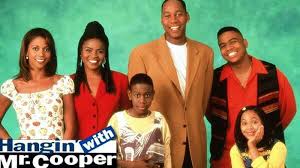
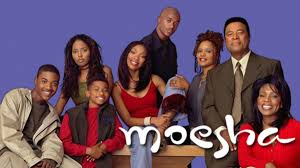
The Big 3 of Black sitcoms opened the door for black families on television, and the 90s saw an explosion of representation of black families. Shows like Hanging with Mr. Cooper, Moesha, and Smart Guy featured families that weren’t technically nuclear. Hanging with Mr. Cooper and Smart Guy featured families with single parents raising children to the best of their abilities with the help of the community around them. Though the titular Mr. Cooper had no children, he acted as a father figure and friend to  Nicole, the child of single mother, Georgia, and other kids in the neighborhood. Moesha and Smart Guy dealt the life after the death the family matriarch, and life after such a tragedy. These sitcoms presented different configurations of the Black family that were still positive and uplifting. 

However, after The Cosby Show, The Fresh Prince of Bel-Air, and Family Matter in 1998, the picture of the black family in America diminished. Television has evolved. Shows like Empire, Love and Hip Hop, Basketball Ball Wives, and The Real Housewives of (insert city) are the portrayals of black family seen today. The black family is seriously misrepresented. It is broken and dysfunctional at best. Black women on TV are unmarried and can’t find a man, and the men are untrustworthy players with multiple children. People can argue that “families” such as this exist in America, yet it’s not all that exists so it’s not all that should be portrayed (or the majority of what is portrayed). So what happened to empowering black women? Black men? Black children? The black family? Where’s the sense of black consciousness that infected the 90s? The Fresh Prince was raised by a single mother and barely knew his father, but he had a support system and family in uncle Phil, aunt Vivian, and his cousins. The show exposed the bad, but showed there can be good too.

With the black family’s downfall came the demise of the view of the ultimate black patriarch, Bill Cosby. Since 2000, Bill Cosby has faced sexual assault and abuse, rape, and drug allegations from over fifty women that he encountered before and during the pinnacle of his career. These allegations have rocked the black community and torn people apart, supporters and now naysayers of Cosby. During The Cosby Show’s reign, no one would have conceived that Bill Cosby, Mr. Huxtable, loveable father and doting husband would fall from grace. Yet, he has. No matter what one chooses to believe about him, he has fallen, hard. The beginning of Cosby’s assault allegations coincides with the end of the black family on TV.

The end of an era.

Symbolic or coincidental?

Both. ––B. Stewart


[i] “The Cosby Show.” TVGuide.com. CBS Interactive, Inc., 2015. Web. 28 Nov. 2015.

[ii] Rohter, Larry. “‘Fresh Prince of Bel Air’ Puts Rap in Mainstream.” The New York Times. The New York Times, 16 Sept. 1990. Web. 28 Nov. 2015.


The term “African-American”

In the year 1903, the great black intellectual W. E. B. Du Bois presented the idea of “double consciousness” in his book entitled The Souls of Black Folk. He was simply referring to the belief that blacks living in America saw themselves in two different aspects. These aspects were both African and American. Although the term “Negro” was still used during the time of Du Bois, his concept of double consciousness way able to provide foundation elements to the term that later became known as “African-American”. Throughout history there have been many terms to describe groups of people. For the black people born and raised in the United States, this has definitely been true. From slave, nigger, negro, to black, these particular words have all been used to describe a particular race. Fast-forward to the year 1988, when the Rev. Jesse Jackson held a news conference encouraging the use of the term African-American. This particular term to define a certain race would go on and cause much debate and controversy throughout the 90s, even to the present day.

Jesse Jackson’s decision to use the term African-American spoke to a large group of people, but at the same time gained a lot of disapproval. The 90s were very important as it relates to the image of blacks being promoted to the world. Coming up with the “correct” term to call entire race was not easy due to individual personal beliefs. The idea of moving away from the term “Black” seemed to take the political approach and get rid of an entire history. This definitely did not sit well with people who considered themselves black and as a collective people throughout the diaspora with a shared struggle. On the other hand the term African-American was found best suitable for some because of the belief that the United States had made progressive steps since the Civil Rights Movement to consider a marginalized race citizens. While there were debates about what term to use, one of the most important things was exactly how a race was being treated by “its” country.

The 90s witnessed everything from the popularity of the Cosby Show to a resurgence of Black Nationalism beliefs. Both aspects represented the many different people that made up a race. The term African-American eventually became nationally recognized in 1997 by the United States government. Although the term was recognized by the government did not mean that everyone was on board. The same government that had recognized the term was the same government that was still plagued with different aspects of discrimination. Overall, the term African-American is still debatable and there has been individuals pushing for the idea of just being considered American in more recent times. Only time will tell if the term African-American will be around in the future or become a thing in the past like previous terms used to describe a race of people. – Andy Reid

Gang Wars and Peace Truces in Early 90s Media: From NY and LA to Little Rock

“What’s crackin cuz?”

“What’s poppin blood?”

Depending on your location, situation, and ability to understand gang-related terminology, your answer to these questions could determine if you lived or died on certain streets in the 1990s. During that decade, a language that many outsiders interpreted as young urban slang came to signify real insider knowledge, especially at a time when urban youth increasingly defined themselves by street cred, street cred by street violence, and street violence by gang violence, which in turn, became mass mediated gang wars.

From Los Angeles to Little Rock, gang activity experienced a surge across the United States in the early 1990s. This is particularly true of the Southern region. According to a 2010 government History of Street Gangs in the United States, “the southern region led the nation in the number of new gang cities, a 32 percent increase” from the 1970s through the 1990s. By 1998, the South had more states reporting gang problems than any other region in the nation. In fact at the time, this made the South look like it was catching up with the West, Midwest, and Northeast in terms of gang activity.


One HBO documentary from 1994 attempted to capture this spike in southern gang activity as it was felt in Little Rock, Arkansas, of all places. Director Mark Levin’s footage of Hoover Folk, Crip, and Blood gang member initiation rituals, ceremonies, and their groups’ deadly impact on children in a small city shocked the nation. Levin tracked this impact by following Steve Nawojczyk, the Pulaski County coroner at the time (and still-active community leader for inner city youth), to portray a sad state of affairs for Little Rock, and by extension, a narrative of decline for small cities in the South that were similarly affected by gang violence.

What’s interesting about this documentary is how it leads with a largely white, racially and sexually integrated set of Chicago’s Hoover Folk, showing its teenage members sitting in public parks around Little Rock, listening and singing along to Tupac, while later “beating in” a young woman who wants to be initiated. The priorities laid out in this sequence of events are clear: young white kids are being influenced by rap music, and they’re doing violence to one of their white female peers.

This sequence follows a familiar pattern, one well-known among the American black community—a pattern where young white kids are portrayed in the media as being corrupted by the influence of black American communities where “all the trouble started.” The documentary participates in this narrative by telling the story of a slightly older black men who came up in the Crip and Blood scene of Los Angeles, but later moved to Little Rock in the 1980s, where the documentary suggests the man becomes a major kingpin of that city’s 1990s gang scene.

Gang War: Bangin’ in Little Rock is unique in its mass mediated portrayal of gang violence affecting white urban youth in a small city, but its subtle portrayal of the American black community as the root of such violence is all-too-familiar. Throughout the early 1990s, movies, television, music and documentaries engaged in a systemic pattern of portraying gang-related crime, gang violence, and gang wars in ways that made that violence look peculiar to American black communities, especially black youth in the inner cities of Los Angeles and New York City. We can see such depictions most readily in movies like Boyz in the Hood (1991) and New Jack City (1991), which show young black men struggling to survive gang violence within their predominantly black neighborhoods in Los Angeles and New York City, respectively.

Then on television and again in 1991, national and international audiences witnessed the initial filming and eventual fallout from the Rodney King beatings in the form of the LA Uprising, whose television news coverage repeated the same systemic pattern of negatively portraying black communities as hotbeds of criminal and gang-related activity. Filtered through an implicit bias about violence on the West Coast—which we also see iterated in the Little Rock documentary when Levin focuses on the city’s supposed kingpin from LA—this event took place in Los Angeles, where the violent video images of white LAPD officers viciously beating the young black King within an inch of his life were broadcast and looped on national news networks for over a year between 1991 and 1992.

Perhaps one day, we will regard this “beat-in” as the horrific act of gang violence it actually was.

But what isn’t often remembered in mainstream accounts of the LA Uprising (an event formerly called the “LA Riots”), which directly followed the acquittal of the white LAPD officers who beat Rodney King, is that it was directly preceded by the Watts Truce between Crip and Blood gangs in 1992. Gangs such as the Crips and Bloods had been around for your years before the decision to call the 1992 truce, and issues of police brutality and racism was not the only thing that led to the truce. Active and non-active gang members on both side had realized how much destruction they had caused on their own neighborhoods. For a short period of time, there seemed to be some end to the madness that was brewing between two rival gangs. Entertainers such as Snoop Dogg and football legend Jim Brown were both vocal about keeping the peace. Here, we see black entertainers (mostly rappers and activists), highlight the possibilities of representing black people in a more positive light.

And yet just days after this small armistice and positive media coverage, the LA Riots, or what many now consider the LA Uprising, began after the white police officers who beat Rodney King were acquitted of their crimes. From television news coverage of looting to beatings in the street, the Uprising had people around the nation tuned into the their TVs to see what was going on in LA. And although Watts Truce was still fresh, there was resurgence of violence between the groups because of the LA Riots. Both gangs used the time of chaos to attack each other which ultimately destroyed what many had hoped would end the violence between the two.

However, while short-lived and a little too early, the Watts Truce sent a powerful message, not only to white Americans, but also to black Americans, that change was possible if mortal enemies united against much larger common enemies, such as police brutality and racist media coverage. In Black Looks (1994), bell hooks explains why such racially biased mediations exist by calling attention to their (mostly white) American mainstream audience, which has an implicit, complicit, perverse, and voyeuristic desire to observe representations of black men’s bodies being assaulted by “white racist violence, black on black violence, the violence of overwork, and the violence of addiction and disease” (34). Indeed, it should come as little surprise that both movies and television—two forms of media that are most often made with that mainstream, mostly white audience at the time—reinforce these stereotypes.

So from New York to LA to Little Rock, the 90s were a unique period in the history of representation of black culture in the United States. Indeed, the LA gang peace treaty and the LA Uprising were critical events in that history: one that, if we listen only to 90s media, is simply a story of gang wars and occasional peace treaties that largely affected African American communities. However, if we listen more closely, particularly to the voices of those communities, we might, sometime in the future, begin to hear how to avoid repeating mistakes of the past.

One of those voices comes from West Coast rapper Kam, who might have said it best in his 1993 song “Peace Treaty.”

— Andy Reid and Joshua Ryan Jackson

Works Cited

hooks, bell. Black Looks: Race and Representation. South End P, 1992.

Boyz N the Hood

“Either they don’t know, don’t show, or don’t care about what’s going on in the hood” were the words spoken by the young black-male character named “Doughboy” in the 1991 John Singleton directed movie entitled Boyz N the Hood. Although Doughboy was referring to the nonexistent news coverage of the murder of brother “Ricky”, his words spoke to an entire Los Angeles culture that filled was filled sex, drugs, gang violence, and police brutality. Director John Singleton is able to capture a very unique time in history as it relates to black 90s culture and he is also able to bring the world into the everyday life of a young black male growing up in the streets of South Central, LA. The theme of Boyz N the Hood is able to be presented through the eyes of the main character “Tre Styles” and this particular movie is able to be deemed a “hood classic” by its viewers.

The year 1991 was a very critical year as it relates to race relations in the United States. Racial tensions in 1991 rose to high levels after the brutal beating of Rodney King by the Los Angeles Police Department (LAPD). This particular incident was able to spark serious conversations surrounding race in America. From “political” rap to “hood” films the issues of Rodney King and the LAPD were addressed. The film was able to put numerous stereotypes on display while at the same time having a message for the viewer. In a time when the world had its eye on Los Angeles, Boyz N the Hood was able to take advantage of that while the world was watching.
Throughout the film, there are a number of memorable moments that showcase black love, black families, and black violence. Each scene is able to incorporate one of these particular elements and tie it back to the overall theme of black culture in the 90s. One of the most heart wrenching scenes from the film is when the character Ricky is murder by what appears to be members of the California-created gang “The Bloods”. Being murdered on the same day his above average SAT scores came in the mail, Ricky represents the good kid that played football, but is still not exempt from the everyday struggle of the “hood”. On one hand John Singleton is able to show that even the hood cries after Ricky’s death, but he is also able to showcase the numbness of death and that retaliation is mandatory. By allowing one of the “positive” characters to die in the film, Singleton promotes the idea that bullets do not have any name on it which definitely resonates with the black lives taken throughout the 90s.

Rather it’s the individual story of Doughboy or the story of Tre Styles who had an active father and mother in his life, the viewer is able to find one major similarity between the two. This similarity is that both characters were black men living in a country that deemed their life less important. Boyz N the Hood continues to push this particular belief throughout the movie as a way of putting the “truth” in society’s face. This is what makes the film highly important because it does not “sugarcoat” the politics that were going on in America during the time. It forces the viewer to come outside of their comfort zone which much of the different forms of art did in the 90s. There have been many that have argued that films such as Boyz N the Hood have added to the destruction of black culture, but depending on who is asked, the film simply pulls back the veil that has covered the issues surrounding black communities. —Andy Reid

The Allen Iverson Era

“I thought that once this day came, it would be basically a tragic day. I never imagined the day coming, but I knew it would come and I feel proud and happy to say that I am happy with my decision.” These particular words were spoken in the year of 2013 from a basketball legend by the name of Allen Iverson. With tears in his eyes and his children by his side, Iverson announced to the world that he had officially decided to retire from the game of basketball. The man that had once been able to fill thousands of seats with fans intrigued by his very unique playing style had now come to the realization that his NBA career was over. As millions of viewers tuned into ESPN to hear his retirement announcement, there were constant status updates on social media websites expressing their sadness to hear arguably one of the best NBA players from the 90s say his final goodbyes to his fans.

Drafted first overall pick by the Philadelphia 76ers in the 1996 NBA draft, the Hampton, Virginia native Allen Iverson would change the sport of basketball forever. Spending two years at Georgetown University as a student-athlete, the announcement of his name on draft night was a major deal. Dressed in a grey suit with his mother and friends in attendance, Allen Iverson had risen from the tough streets of Virginia where he was raised by only his mother. Before that night in 1996, the long road of obstacles presented before him had already begun. In 1993, while still in high school, Iverson and his friends at the time were involved in a fight with a group of white patrons at a bowling alley that led to Iverson eventually being charged with hitting a white woman with a chair. After spending four months in prison at the age of 17, Iverson was released and was granted clemency because a lack of evidence. This particular event not only followed Iverson throughout his NBA career, but it also sheds light on some of the racial tension that was brewing during the 90s.

By the time Allen Iverson had played his first NBA game in Philadelphia, he was already starting to become a fan favorite and attracting a lot of attention. His stardom only grew in the year of 1997 when he played against the Chicago Bulls. It is in this particular game that Iverson was able to use his well-known “crossover” move on the great Michael Jordan. Sending Jordan into a state of confusion, Iverson was able to give him a dose of his own medicine with his quick, but “smooth” moves and seemed to send a statement to Jordan that there was a new star in town. This is what many believed to be Iverson’s introduction to legendary status and many have argued that this was the beginning of the end for Michael Jordan. It was not long after his rise to fame that the media began their image attack on Iverson. From family issues to conversations surrounding racial discrimination, the media ran with the personal life of Iverson and ultimately served as an opponent off the court.

What went from his great abilities to play basketball in 1996 quickly transitioned into debates about his appearance and character outside of the game of basketball. Standing approximately 6 feet with designed cornrows and tattoos, Iverson definitely stood out from the rest of the NBA players. His appearance was able to challenge traditional standards and also allowed critics to paint him as a society-created stereotypical black man with sagging pants and rap music blasting through his headphones. Iverson would also walk onto the court with his hair in an afro and headband on while sporting longer basketball shorts. His ownership in his look was able to attract a brand new fan-base while at the same time pissing off white America and older generation African-Americans. Also his own shoe deal with Reebok allowed him to become an entrepreneur outside of basketball and influence a younger generation watching his every “move”.

With the popularity of Hip-Hop growing during the 90s, Allen Iverson was also able to have an influence in that particular arena as well. His released rap song entitled 40 Bars tackled the aspect of sex, drugs, and money. His is able to brag about his lavish lifestyle as a “baller” on this particular track and present a side of him that his fans has never seen before. The media was able to use this particular song created by Iverson in order to justify their judgements of him. From being called a cheater to a thug, the life of Iverson seemed to have transpire out of control. For a young man that had only ever dreamed of playing professional basketball and win a championship ring which he never did, the evils of fame created difficulties for his career. On one hand Allen Iverson just wanted to express himself through basketball and other creativities, but on the other he seemed to never escape the stereotypes placed on black males living America.

The basketball career of Allen Iverson is very unique and important to the black 90s as it relates to black images presented to the world. His lavish spending habits to his public disputes with his wife, often overshadowed the fact that he was actually able to make it to the NBA finals and be an all-star player for consecutive years. Iverson is often blamed for the Hip-Hop culture in the NBA and is said to be the reason the league enforced a strict dress code for NBA players because of Iverson’s rapper image. In the midst of negativity often associated with Iverson, he was one of the best athletes ever. Not many athletes have been able to change an entire sports league and give birth to a new generation of athletes. Iverson was able to take the number 3 which was his jersey number and forever have it mentioned with the great numbers affiliated with sports history. The love/hate relationship with the man that once argued that he did not need to “practice” can still be found today, two years removed from his official retirement announcement. —Andy Reid

Works Cited

http://espn.go.com/nba/story/_/id/9839119/allen-iverson-officially-retire-oct-30-sources


css.php