The Real World Prototype and Reality TV

The Real World Logo

As a network developed to provide a new platform for music’s developing stars, MTV changed the lives of countless young artists looking for a break into the industry. During the 90s, MTV featured shows that primarily emphasized music: Yo! MTV Raps, MTV Unplugged, Alternative Nation, Club MTV, and Total Request Live are several programs that linked the entertainers and fans together by giving the fans control over what content aired. MTV’s popularity anchored itself in the young viewership of teens and young adults between the ages of 18-25; the pride of the network centered around creating a space dedicated to youth popular culture and the decade’s hottest rappers, rockers, and pop stars.

MTV also designed programming that focused on broader topics, like MTV News, in an effort to round out its offerings. The network’s longest running series, MTV’s The Real World, highlighted the day-to-day lives of young people from various backgrounds living together in a predetermined city. The show’s introductory tagline became ubiquitous with its content, and viewers could always count on an explosive combination of personalities to fuel each season’s unpredictable episodes:

“This is the true story of seven strangers, picked to live in a house, work together, and have their lives taped. Find out what happens when people stop being polite and start getting real…”

For twenty-five years, young people from different geographic locations and with varying backgrounds came together in cities throughout the country for our viewing pleasure, making The Real World the first successful reality television show broadcasted in America.

The Real World was modeled after Beverly Hills 90210 and Melrose Place, as an alternative to major network soap operas targeting middle-aged women. Mary-Ellis Bunim and Jonathan Murray, the show’s creators, opted for the “reality” format of The Real World, because their budget didn’t allow for writers, set design, actors, etc. So, they decided to let the participants create the storyline. The show’s first season was set in New York City and filmed over a three-month period, with each cast member receiving $2,600 for appearing on the show. And in New York, things got really real (well, at least according to mainstream TV content in the 90s).

What later becomes typical behavior amongst The Real World castmates was exciting and fresh during its 1992 debut (and for a few seasons thereafter). The thirteen episodes of Season One show Becky, Kevin, Heather, Julie, Andre, Eric and Norman working through romance, sex, illness, familial relationships, and social issues. The roommates are divided by gender 3:4 (female-to-male), and 5:2 ethnically (with two African-American cast members). Race plays a factor is several episodes, with Kevin Powell leading many conversations that highlight divisions within the house. His (in)famous confrontation with roommate Julie Gentry demonstrates the organic manner in which controversy arose, making the episodes worth watching.
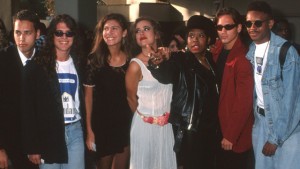
Norman Korpi, Andre Comeau, Julie Oliver, Rebecca Blasband, Heather B., Eric Nies and Kevin Powell of The Real World New York Cast (Photo by Ron Galella, Ltd./WireImage)

The abridged version of the confrontation goes as follows: Julie accused Kevin of threatening her with physical violence and spitting at her after she refused to let him use their house phone (remember: this show’s original airing predates cell phones and all things technologically mobile). He admitted to being upset with her but denied spitting at her. When Norman and Eric sided with Julie, Kevin pointed to race as the underpinning for Norman and Eric’s alignment with Julie, but Julie sited what she determined as Kevin’s past record of aggressive behavior as the justification for her sentiments. The parties later reached some type of amicable resolution, but this episode created a precedent later followed by other seasons, where not only race, but religion, gender, and sexual orientation often divided the castmates. The show’s best moments are those credited for opening up tough conversations among young people.
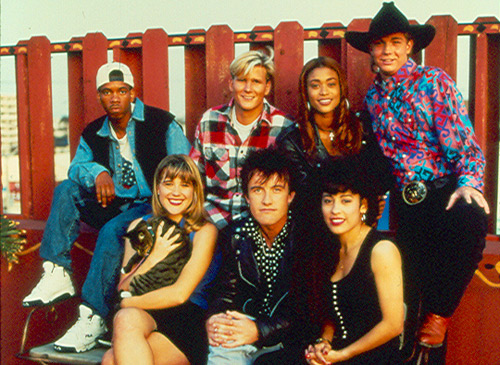
Future roommates, almost always from various upbringings and of different ethic backgrounds, would confront similar issues: race, gender discrimination, differences concerning sexual orientation, political beliefs, body image issues, and religion. In Season Two, The Real World: Los Angeles, castmates Tami Akbar (m. Roman, later star of VH1’s Basketball Wives) and David Edwards divide the house after what begins as a prank targeting Tami. The incident escalated to a physical confrontation between the cast members, ultimately resulting in the decision to remove David from the house.

The Real World may be credited as the pioneering reality television program, and its influence remains evident in various popular “reality” TV shows on various networks. While there’s a show out there for a number of interests—meant quite literally, as every network, from HGTV to The History Channel, offers some reality-based series— few strike more intrigue than those offering insight into Black culture. More specifically, many shows feature African-American women feigning friendships, chasing men, and digging into entrepreneurial endeavors. And no Black reality TV show is complete until an episode features a shade-throwing-, tea-spilling-, let-me-get-you-together-type confrontation. The entertainment factor is undeniable, though, as shows like Bravo’s The Real Housewives of Atlanta and VH1’s Love & Hip Hop have reached ratings as high as 4.3 and 3.8 million, respectively.

Bunim and Murray’s reality TV formula allowed for an organic plot-development (although film was edited to help establish a traceable storyline), and the issues the casts encountered mimicked situations relatable to the audience. As The Real World progressed, audiences criticized producers for what many perceived as scripted conflicts and contrived conversations. It seems, however, that recent reality TV shows are only popular if the drama is “too good to be true.”

Nonetheless, our favorite reality starlets are also feeling a little shade from their fanbases, too. Ratings for many shows reflect a decline in viewership over the years, and in an effort to remain relevant, many storylines have expanded far too far away from “reality” (Do they have to fight every week?). And more troubling, for some, is what’s frequently cited as a collective misrepresentation of Black woman and the threat of conveying a distasteful, inaccurate message to young Black girls about Black womanhood in America.

Because of a history of oppression, subservience, dispossession of the body, abuse, malicious sexual intrigue, and marginalization by American at-large, we may question if Black reality TV supports or disrupts the perpetual race- and gender-based pursuit of acknowledgement, acceptance, and encouragement of Black women (and other women of color) in society. Are these women our entertainers, role models, or stereotype perpetuators? —Shari Arnold


RHOA

LHHA Cast

References

<http://www.emmytvlegends.org/interviews/shows/real-world-the>

<http://www.usmagazine.com/entertainment/news/real-world-new-york-cast-reuniting-22-years-later-on-oprahs-show-20141712>

<https://lmarsh11.wordpress.com/tag/seven-strangers-picked-to-live-in-a-house/>

<http://www.theroot.com/articles/culture/2013/03/race_on_the_real_world_retro_mtv_and_social_issues.2.html>

<http://www.ibtimes.com/mtv-ratings-decline-raises-relevance-questions-young-people-cut-cable-cord-devices-1881468>

<http://allthingsrh.com/rhoa-ratings/>

<http://allhiphop.com/2015/05/08/is-love-hip-hop-languishing-in-ratings/>

R and B Takes Over: The Evolution of Rhythm and Blues through the 90s

ilovethe90s

Every decade has its musical era or movement with which it is equated, and the 90s was no different. From doo-wop and Motown owning the 60s, disco reigning in the 70s, to the dawn of hip hop in the 80s, they all contributed to a new genre and culture of music that would come to be known as rhythm and blues (r&b).  The mixture of soul, blues, rock and roll, and disco, and ultimately hip hop shaped r&b as it allowed artists to take different musical avenues and/or combined the sounds to create something new for the next generation.  The 1990s introduced another wave of girl and guy groups that skyrocketed to fame by including “ elements of rap—including sampling, scratching (a percussion technique that involves running a record needle manually across vinyl records), and declaimed vocals—had become part of what could perhaps best be described as dance-based, post-disco music” (The History of R&B).

silk

Jodeci1

BBD-Promo-2

The likes of Jodeci, Silk, Boyz II Men, BellBivDeVoe, Dru Hill, Next, and Mint Condition produced a range of songs from party music to baby makers to “baby, please don’t leave me’s”.  These guy groups exhibited soulful sounds and sex appeal that made their audiences swoon.  The stacked harmonies made for musical delight, and the half-naked wardrobe was aesthetically pleasing.  Songs like Jodeci’s “Forever My Lady” and “Do You Believe In Love” displayed how they were proud to exclaim love and adoration for women, and Dru Hill’s “We’re Not Making Love” that showed heartache at the hands of a failing relationship.  However, don’t sleep on the ladies, groups like SWV, TLC, Xscape, Brownstone, and Destiny Child had a following that would make Greek gods jealous.  Varying in looks from baggy and oversized to fitted and seductive clothing, girl groups of the 1990s also had something to say about life and love. SWV told us that the love of the right man can make you “Weak” in the knees, and that sometimes women are willing to do whatever it takes to find out if “[He’s] The One”.  Xscape helped us find someone “to run to when [we] need love”, and also gave us permission to keep a “Little Secret” but only if he’s worth it. 90s r&b music was so emotionally charged ranging from happy in love to brokenhearted to just getting down to the nitty gritty.

SWV xscape-e1341933895975While groups reigned supreme, no one knew how to get down better than Mr. Bump and Grind himself, R. Kelly.  The Chicago native ruled the 90s with his seductive slow jams to get you in the mood.  With his sexually suggestive lyrics, and powerful tenor/baritone voice, R. Kelly knew how to reach his audience.  The ladies loved him with his tall, solid stature and bald head, and the fellas either wanted to be him or beat him for upping the ante of sex appeal and female appreciation.  He was just one of many that made women go crazy for their looks and voices, some of his musical peers include: Eric Benet, D’Angelo, Ginuwine, and Maxwell.

r kelly

The 90s also brought about quite a few female heavy-hitters such Mary J. Blige (who would come to be crowned the Queen of Hip Hop and R&B), Faith Evans, Janet Jackson, Erykah Badu, and Lauryn Hill.  Given such the diversified artistry of these women, they were at the top of the r&b charts through their own respectful channels, occasionally joining forces to blow our minds.

mary-j-blige-k-ci

Mary J. Blige hit the scene in a major way in 1992 with her debut album “What’s the 411?” This album featured her first single “Real Love” (Bowser).  The soulful raspy-ness, pain, and “street” influence of her voice made her relatable to the everyday woman.  She spoke about love in a real, raw, and uncut way, all of its ups and downs, goods and bads.  In the interim of her developing success she began dating lead singer of Jodeci “K-Ci”.  Their love was one of epic proportions, but “crashed and burned” after many years of tumultuous events.  There is no doubt that the love was real, K-Ci said so himself- ‘“I was in love with Mary. She never did anything wrong to me. She always gave me my props.”’ But they were self-destructive together and toxic for one another as both struggled with substance abuse. Though it made for good music, both were on a downward spiral until the hit rock bottom, but the love they shared will always be unmatched. —Nikkia Grant


Works Cited

Bowser, Edward. The Kings and Queens of R&B :1990-1999. 18 May 2015. Web. 13 December 2015. <http://www.soulinstereo.com/2015/05/the-kings-and-queens-of-rb-1990-1999.html>.

Hailey, KCi. K-CI OPENS UP ABOUT TUMULTUOUS RELATIONSHIP WITH MARY J. BLIGE: “I’M NOT GON’ LIE, I DID SOME THINGS” The Breakfast Club. Ed. Jazmine Denise Rogers. 2 April 2015. Web. 13 December 2015. <http://madamenoire.com/523153/k-ci-opens-up-about-tumultuous-relationship-with-mary-j-blige-im-not-gon-lie-i-did-some-things/>.

The History of R&B. n.d. Web. 13 December 2015. <http://slambeck.home.xs4all.nl/His/slshis4.htm#_Toc478089277>.


Female Rap Royalty of the 90s

With the increased popularity of hip hop culture in the 1980s, it was only right that women took their rightful places at this musical table. Many female emcees, or rappers as they would come to be known, saw the 1990s as their opportunity at stardom. They felt that their messages were just as important as those of their male counterparts. From the legendary MC Lyte who rocked the late 80s into the early 90s to Ms. Lauryn Hill whose sultry voice bridged hip hop and r and b, female emcees of the 1990s were a force to be reckoned with. They enlightened the world about important issues such as the respect of women, female equality, sexism, and social injustices in the “hood”, while simultaneously displaying sensuality and sex appeal.

mc lyte

The dawn of the 90s broke with artists like Queen Latifah, YoYo, and Lady of Rage. They spoke out about how women should be treated, and the respect that they deserve as part of society and the rapidly growing hip hop genre. Latifah’s hit record “U.N.I.T.Y.” addressed sexism with lyrics like, ” I had my cutoff shorts on right cause it was crazy hot/ I walked past these dudes when they passed me/ One of ’em felt my booty, he was nasty/ I turned around red, somebody was catching the wrath/ Then the little one said (Yeah me b****) and laughed/ Since he was with his boys he tried to break fly/ Huh, I punched him dead in his eye and said “Who you calling a b****?”‘ (Genius). Lady of Rage let the world know that she ran things and wasn’t a punk or scared rather “[she] rock[s] rough and stuff with [her] Afro Puffs/ (Rage)/ Rock on, wit’ cha bad self.”

yoyoqueen latifah lady of rage


Although many of the first female emcees hailed from the northeast of the United States, in 1994 a young woman who would come to be known as Da Brat released her debut album that sold over a million copies making her the first female hip hop artist to go platinum (March). The mid-90s ushered in a much more liberated, coarse, raw era. The likes of Foxy Brown and Lil Kim opened the doorway for female hip hop artists to be as sexually and verbally explicit as their male counterparts. They addressed “street life” from the female perspective. From the hood beat of Kim’s chart toppers to the island vibe of Foxy’s club bangers, these female emcees publicly gave women permission to live life adulterated and unapologetically uncut as they spit lyrics only previously heard by men and dressed in a manner which left little to the imagination.

da brat

lil kim        foxy brown


As the new millennium approached, many more artists began to rise to power. Eve: First Lady of Ruff Ryders, Missy Elliott, and Lauryn Hill diverged in different directions as they diversified the hip hop genre. The rough around the edges, Philadelphia native, and only female member of the Ruff Ryders crew immediately came in marking her musical territory. Missy Elliott hailing from Portsmouth, VA arrived on the scene with her futuristic concepts and vivid musical metaphors. Finally, none other than Ms. Lauryn Hill only female member of the group The Fugees (Refugees) that spoke to social consciousness. Her warm, embracing voice and old school hip hop vibe allowed her to bridge the gap between genres and generations. Her debut solo album “The Miseducation of Lauryn Hill” earned her five Grammy awards at the 1999 awards show. Female emcees definitely made their mark on hip hop history and paved the way for artists on the future. –Nikkia Grant

eve 2missylauryn hill

Works Cited

Genius Media Group Inc. Genius. 2012. Web. 28 November 2015.      <http://genius.com/Queen-latifah-unity-lyrics>.

March, Chase. The History of Women in Hip Hop. 6 April 2013. Web. 20 November 2015. <http://chasemarch.com/2013/04/the-history-of-women-in-hip-hop.html>.


Hip-Hop After the Deaths of Biggie and Pac

To this day, two of hip-hop’s most polarizing figures are Notorious B.I.G. (a.k.a. Biggie Smalls) and Tupac (or 2Pac—depending upon the publication) Shakur. Giants in an already giant industry, their feud would spill into an East Coast versus West Coast Battle that would eventually claim the lives of both emcees. For those who have been living under a rock for the past twenty years, the beef between the two started in late 1994 when Tupac was entering Quad Recording Studios. He was then shot 5 times by still unknown assailants. Biggie, who was recording at the same studio, was blamed in the media by Shakur, especially after Biggie released the song “Who Shot Ya” off of his upcoming album (ironically titled Ready to Die). ‘Pac took the song as a not so subtle admission by B.I.G. to having a hand in the perceived set-up at Quad Studios. Tupac would then escalate the beef through taunts delivered through interviews in both print and video media. There were claims of adultery between ‘Pac and Biggie’s estranged wife Faith Evans. Then, there was what some consider the most scathing dis record “Hit Em Up” in which Pac lyrically bludgeoned the rapper born Christopher Wallace. It is worth noting that Biggie never responded to Tupac on wax. It was his desire to squash the beef at which he found himself the center of. There was even a meeting that Biggie spoke of on his VH1 “Behind the Music” in which each rapper, along with their entourages, encountered each other backstage at an awards show. Biggie reportedly asked 2Pac, “Yo man! What are you doing?” to which ‘Pac replied, “Man I’m just trying to sell some records.”

On the night of September 7, 1996, shortly after leaving a Mike Tyson fight in Las Vegas, Nevada, Tupac, and Death Row Records CEO Marion “Suge” Knight were in a car that was riddled with bullets while at a traffic light. It was barely 6 months later, on March 9, 1997 when Notorious B.I.G. would be shot in Los Angeles California—also while stopped at a traffic light. While ‘Pac fought for his life in a Las Vegas hospital over the next six days, Biggie was unfortunately pronounced dead within a couple of hours of his shooting.
Both deaths were a great loss in the hip-hop community. Both Biggie and Pac were rising stars in an increasingly popular art form. When one considers their ages—24 and 25 respectively, it just makes one wonder, what could have been. In the years immediately following their deaths, hip-hop took a decidedly less aggressive, less violent tone as a whole. Whereas the early and mid 90s were ripe with what would later be termed “gangsta rap”, the latter part of the 90s had a lot of hip hop that was either party oriented or socially conscious. Some of the biggest albums of the late 90s included Will Smith’s “Big Willie Style”, Lauryn Hill’s “The Miseducation of Lauryn Hill”, Mase’s “Harlem World” Outkast’s “Aquemini” and Extinction Level Even from Busta Rhymes. Even Tupac’s former Death Row label mate, Dr. Dre had toned down his more gangster musings for a more clean-cut image with the launch of his label Aftermath. Sure there were still songs peppered with violent imagery such as the “Ruff Ryders’ Anthem” by DMX and “Shook Ones” by Mobb Deep, but largely, these songs were being replaced by songs that praised material excess, sex, and having a good time or conversely, songs that intended to make one think about the intrinsic value (or lack thereof) of the aforementioned lifestyle. Even labels such as No Limit had begun to eschew their rowdy street anthems with more party oriented singles such as “Make ‘Em Say Ugh” and reflective songs such as “I Miss My Homies”.

If one takes a look at the top rap songs for the years 1997, 1998, and 1999, you would be hard-pressed to find any ultraviolent tracks that could be classified as “gangsta rap”. As mentioned before, a few songs with more violent material slipped through the cracks, but that was more the exception to the norm as opposed to the norm.
1997 Billboard Top Rap Songs
1998 Billboard Top Rap Songs
1999 Billboard Top Rap Songs

The Rain (Supa Dupa Fly)- Missy “Misdemeanor” Elliott

Gettin’ Jiggy With It- Will Smith

BBD: Reinvention Showcases New Jack Swing and Brings Unexpected Success

Bell Biv Devoe (BBD) wasn’t expected to be successful. As members of New Edition, Ricky Bell, Michael Bivens, and Ronnie Devoe were there to round out a quartet. In 1990, they released the album Poison.  However, the trio was able to tap into the New Edition following that was largely around the age of 19 at that time. BBD’s success was largely due to capitalizing on this loyal following that enjoyed and embraced the raunchy sexuality that was a part of the audience’s lives—or at least their desires. BBD created hits such as “Poison” and “Do Me Baby” whose lyrics and videos are a part of the hip hop lexicon.

Poison album cover (1990)

New Edition is an ingrained part of black culture. They were the biggest boy band of the early 1980s. However, BBD became cultural icons in the 1990s. Some critics argue they even eclipsed New Edition’s success. The trio was no longer tied down to the suits and precision of the boy band quartet. They wore graffiti painted overalls, different color shoes, and tried new things just because they could. They had nothing to lose. They challenged the establishment. One example of this can be seen in the choice to defy the cultural standard of suits at 1991 American Music Awards. Nominated for four awards, BBD showed up in t-shirts and wore their jeans inside out. They walked away with two awards for Favorite Soul/R&B New Artists and Favorite Dance New Artist

BBD in painted coveralls

They were musically adventurous. Using Public Enemy producers Hank Shocklee, Keith Shocklee, and Eric “Vietnam” Sadler to produce much of their album created an edge to their sound. Spyda Man and Dr. Freeze were also instrumental (and their names are heard in the opening lyrics of “Poison.”) As the phrase goes, “Our music is hip hop smoothed out on an R&B tip with a Pop feel appeal to it.” While Teddy Riley had already coined the term “New Jack Swing” by 1987 in a Village Voice profile, it reached new levels of attention with Poison. Even 25 years after its release, the song (and album) are recognized for its impact. Music blogger Bandini pays homage in a February 2015 article: “…New Jack Swing’s wrecking ball made one of its biggest smashes with the release of Bell Biv DeVoe’s ‘Poison.’”[1]

In 1990, the Poison album was an unexpected success that eventually sold over 4 million copies. In 2012 radio interview, Michael Bivens explains that he is still able “to eat of that [album].” In other words, after more than 20 years, the album and its hits are still profitable in sells and the material is still popular enough for them to make a living touring.

The legacy of New Edition continues. BET is scheduled to release a biopic on the group in 2016. The three-part miniseries will be BET’s first scripted music-focused TV movie. TV producer Jesse Collins explains that “New Edition’s ‘music is woven into the fabric of our culture. When I brought the idea to BET years ago, I wanted to create a film that would tell the story of how New Edition emerged into one of the most important groups of its generation.’”[2]  —Ebony Gibson

[1] Bandini. “25 Years Ago Today, Bell Biv DeVoe Made A Poisonous, Everlasting Hit (Video).” Ambrosia for Heads. Feb. 24 2015

[2] Khatchatourian, Maane. “New Edition Biopic in Works as BET Miniseries.” Variety. Aug. 10 2015.

R.I.P.? The Rise (and Fall) of Neo-Soul

“Soul music is soul music. It can be wrapped up in a neo soul package; it can be called hip-hop soul. But soul is soul, and it’s been around; it will never go away.”

Maxwell, Gulf News

Samples, mixes, electronic bass, high hats, and Motown-esque harmonics underneath idiosyncratic stories of love, politics, and identity positioned neo-soul as an alternative to the decade’s earlier fascination with West Coast gangsta rap by blending elements from various genres to create a new sound: brass horns and improvisation mimic jazz compositions, stacked harmonies and electric guitar melodies replicate 70s soul and funk, and digital beats and storytelling borrow from 80s hip-hop. In the mid-90s, Neo-soul artists seamlessly fused these elements and combined them with original lyrics, branding the genre as a new approach to old conventions.

The term “neo-soul,” universally credited to former Motown Records president Kedar Massenburg, names a space for borrowing and creating. Neo-Soul’s patriarchal genealogy is unclear; some reference D’Angelo’s commercial success with Brown Sugar as his right to the genre’s throne, but others believe Tony! Toni! Toné! front man Raphael Saadiq initially created the experimental space neo-soul now inhabits. Saadiq (and other late 80s/early 90s R&B artists) began experimenting with R&B’s conventions by addressing topics outside love and relationships and mixing electronic elements with live band compositions. The resulting work provided emerging artists creative license while footing them in established soul, funk, and hip-hop roots.

Erykah Badu, neo-soul’s undisputed matriarch, stepped to the mic declaring that her “cypher keeps moving like a rolling stone.” Merging hip-hop (cypher) and soul (Temptations’ “Papa Was A Rolling Stone”), Badu’s 1997 Baduizm presented the definitive neo-soul archetype for artists to-come. Her lyrical content engages love and happiness, familial relationships, political affiliations, and her status as controller of her universe-In, Baduizm’s “Apple Tree,” the songstress makes her position clear: “The world is mine when I wake up/I don’t need nobody rollin’ over lookin’ after me.”

Later neo-soul artists and enthusiasts certainly owe the music’s success to the innovations of Massenburg, D’Angelo, Saadiq, and Badu. Massenburg’s commodification of the sound through the term “neo-soul” packaged the movement for mass consumption, providing fans an accessible product and clearly delineated identity for entertainers. Saadiq’s experimentation acted as the Beta Test for blending diverse sounds. Together with the first accomplishments, the pioneering artists unification of the look and the sound made neo-soul what it was at its height: an intellectual melodic commentary on social, political, economic, and romantic aspects of black realities in the 90s. The music evolved into a lifestyle centered around collective concern for and protection/support of black lives, with an emphasis on interconnectedness through the recognition of individuals as “brothers” and “sisters.”

Though little debate surrounds neo-soul’s impact on Black culture and music in the 90s, recent discussions about its relevance today question how much, if at all, neo-soul exists as an independent genre capable of influencing music trends and lifestyle behaviors. Many artists, both underground and mainstream, take advantage of social media’s ability to instantaneously reach millions of people and receive raw feedback about their work. Where record labels used to primarily discover new talent and market it to the masses, fans now heavily influence artist popularity. Additionally, digital publication allows artists to control their work’s release and opt to expose their albums/mixtapes/singles without corporate backing. Neo-soul, as a publically commodified sound, shifted towards less emphasis on label support and more concern with producing music the fans wanted to hear, and people still want the raw, vulnerable connection to the artists that first made neo-soul popular.

If facts are necessary, the numbers also show that neo-soul remains relevant. Mother Badu boasts an impressive 18-year career, featuring 59 award nominations and 16 wins, 6 albums, 5 number one singles, and a host of features, music videos, and collaborations. Later generations born from the Saadiq-D’Angelo-Badu lineage include artists committed to the self-empowerment and communal love essential to the movement, but they each bring their own flavor to the sound. Those artists include Jill Scott, Musiq Soulchild, Lauryn Hill, Anthony Hamilton, Angie Stone, and India Arie (each who achieved commercial success); others, like Dwele, Ledisi, Leela James, Van Hunt, Tweet, and Bilal embody the neo-soul spirit on a smaller commercial scale.

Music’s evolution creates space for innovations and new artists. And established artists are always pursing new sounds (see Badu’s But U Caint Use My Phone, inspired by Drake’s “Hotline Bling” [which is stolen sampled from D.R.A.M.’s “Cha Cha”]) to grow within the field and with the fans. Neo-Soul’s hybrid composition lends itself to the very sampling, mixing, and collaboration used to create the sound. Because so many sounds begin with techniques popular in other genres, it’s tough to mark a definitive end of any era. —Shari Arnold

The People|The Sound|The Influences|


Kedar MassenburgBadu GIF

Saadiq

JillScott

DAngelo


Leela James

Dwele

OCHO RIOS, JAMAICA - OCTOBER 15: Singer Musiq Soulchild poses for a photo before MTV's Tempo network launch celebration October 15, 2005 in Ocho Rios, Jamaica. (Photo by Scott Gries/Getty Images) *** Local Caption *** Musiq Soulchild

References:

<http://www.rollingstone.com/music/news/the-soul-and-science-of-erykah-badu-20100415>

<http://www.rollingstone.com/music/news/q-a-erykah-gets-her-gun-20010214>

<https://books.google.com/books?id=yCUEAAAAMBAJ&pg=PA72#v=onepage&q&f=false>

<http://www.rollingstone.com/music/news/the-soul-and-science-of-erykah-badu-20100415>

<https://en.wikipedia.org/wiki/Neo_soul>

<http://gulfnews.com/life-style/celebrity/maxwell-makes-his-comeback-1.1276195>

<http://soultrain.com/2014/11/19/neo-soul-music-still-exist/>

<http://www.stereogum.com/1846378/album-of-the-week-erykah-badu-but-you-caint-use-my-phone/franchises/album-of-the-week/>

The Black Imagination and Possibility: Afrofuturist Aesthetics in the 90s and Beyond

What better cultural and theoretical aesthetic to interrogate the interplay of black cultural life in the 90s, the present, and beyond than Afrofuturism? The term refers to a broad aesthetic form that employs technology and various artistic forms (it combines elements of science fiction, fantasy, history, magical realism, and Afrocentrism) to link a historical African past with an imagined black diasporic future.

Attempts by black artists to explore diasporic identity, to reconcile the past with the present, and subsequently envision a future where black is situated as subject, are not new. However, this phenomenon was dubbed “Afrofuturism” in 1994 when Mark Dery, a cultural critic and early writer on techno culture, examined recurring features and themes in African American science fiction, music, and art. In his essay “Black to the Future,” as part of an anthology called Flame Wars: The Discourse of Cyberculture, Dery interviews writers, such as Samuel R. Delany, Greg Tate, and Tricia Rose, in an attempt to explore concerns raised by African Americans writers in the science fiction genre. In the essay, he writes:

Speculative fiction that treats African American themes and addresses African-American concerns in the context of the twentieth-century counterculture–and, more generally, African-American signification that appropriates images of technology and a prosthetically enhanced future–might, for want of a better term, be called ‘Afrofuturism.’

His coinage and definition of Afrofuturism directly relates to science fiction tropes. However, scholars, like Alondra Nelson, Greg Tate, and Tricia Rose (among many others), note that the term encompasses varied art forms and genres, as they relate to black culture and its African retentions.

Important to note is that Dery merely assigned a name to this aesthetic; the form itself has been practiced in black diasporic art for years. There is general sense that the features that comprise an Afrofuturist aesthetic are embedded in black cultural DNA; for they hark in every way to a diasporic identity. In an interview, Alondra Nelson, a social scientist who writes on intersectionality of science, technology, medicine, and inequality, says of the term that it “captured what we’d always known about black culture, but it gave us something to call it, to name it…It gives us a tradition and a legacy, where all the pieces sort of fit together.”

Meteor_Man

Dery’s article is comprised of commentary from Delany, Tate, and Rose, and these three construct the framework of what we know to be Afrofuturism today. Earlier than that, however, Mark Sinker and Greg Tate were generating conversations about black science fiction and its connection to techno culture and music, among others. In 1992, Sinker published an essay, “Loving the Alien” in The New Inquiry, in which he equates historical slavery with alien abduction as represented in literature. Tate wrote a review of David Toop’s Rap Attack called “Yo! Hermeneutics!”, which highlights a science fiction sensibility in black music. According to Nelson, Afrofuturist art, no matter the medium, is imbued with futuristic themes and capitalizes off technological innovation. In the fall of 1998, then a graduate student at NYU, Alondra Nelson and artist Paul D. Miller established an on-line Afrofuturism listserv, and launched Afrofuturism.net in 2000. Both sites were dedicated to science fictions and discussed how the genre addresses a “past of abduction, displacement and alien-nation” and inspires “technical and creative innovations.” Also, in September of 1999, Nelson organized an Afrofuturism forum at NYU, which dedicated conversation to the “future of black production.”

There is no singular definition of Afrofuturism; the aesthetic is as varied and fluid as the cultural identities it explores. To this day, the aesthetic comprises an array of media forms, including, but not limited to, textual, visual, and aural arts. However, at the heart of this aesthetic form lie some artistic and cultural product that 1. examines the past, 2. critiques the present, and 3. “imagines possible futures.” Many works by Afrofuturist artists, in some way, blend elements of the past with the future to assert opinions on sociopolitical and cultural issues concerning black people. With regards to literature, these opinions usually manifest in the dystopian genre. For example, Octavia Butler’s “The Parable Series” (1993-1998), interrogates notions of racial and gender identity in the 2020s. Her depiction of a futuristic society, depraved and plagued by an exacting, ever-widening gap between the rich and poor easily resembles a not-so-far-distant past, and perhaps even the present. Butler, among other black sci-fi writers, also often re articulated traditional African religion and customs in the futuristic contexts of her novels.

Undoubtedly, an Afrofuturistic aesthetic pervades black culture in the 90s. Primarily the music is informed by futuristic sensibilities. Scholars, like Tricia Rose, pointed out how this manifested in the form of technology and sound reproduction. In an interview with Mark Dery, she says, “Digital music technology—samplers, sequencers, drum machines— are themselves cultural objects, and as such the carry cultural ideas.” Musicians, while utilizing aural mechanisms to revamp sound, also incorporated Afrofuturist themes in a visual and lyrical context. Outkast, for example, definitely falls within this extensive lineage of Afrofuturist artists with the albums ATLiens (1996) and Aquemini (1998). Both albums pushed the bounds of production with extraterrestrial sounds and existential, imaginative lyrics.

Afrofuturism-BaduARCHANDROID_COVER

Afrofuturist elements can even be found in Erykah Badu’s video for “Didn’t Cha Know” as it alludes to a liminal space where the subject wanders, simultaneously reaching into the past (allusions to Africa, Kimetics, and Egyptology) and looking towards an uncertain, yet hopeful future. This musical lineage extends even further back, however, to artists, such as George Clinton and Sun Ra, and groups like PFunk, who melded their historically informed visions of the future with jazz and funk sounds. More discussion on the emergence of Afrofuturist aesthetics in science fiction and popular music pre-1990s and 21st-century can be found in John Akomfrah’s 1996 documentary “Last Angel of History.”

Undoubtedly, Afrofuturist themes pervade most areas of black culture today, perhaps more so than it ever has. Its prevalence is evident from the music of Janelle Monae and Flying Lotus, to the novels of Nnedi Okorafo and Tananarive Due, to the visual and performing arts of Adejoke Tugbiyele and OluShola A. Cole. That its popularity is growing makes sense, since we are still ironing out methods of reclaiming culture, reinventing tradition, and redefining notions of blackness. The questions posed and pondered, even before the advent of Afrofuturism as a theoretical perspective, still remain: How do black people imagine a better future for black people? What does that future look like? And, how do we get there? —Keith Freeman

_____________________________________________

Works Cited

Dery, Mark. “Black to the Future: Interviews with Samuel R. Delany, Greg Tate, And Tricia Rose.” Flame Wars: The Discourse of Cyberculture . Durham, NC: Duke University Press, 1994. 179-222. Print.

Nelson, Alondra. “Introduction: Future Texts.” Social Text. 20.2 (2002): 1-15. Web. 10 November 2015.

Soho Rep. “Afrofuturism.” Online video clip. YouTube. Youtube, 22 Apr. 2006. Web. 05 November 2015.

Gang Wars and Peace Truces in Early 90s Media: From NY and LA to Little Rock

“What’s crackin cuz?”

“What’s poppin blood?”

Depending on your location, situation, and ability to understand gang-related terminology, your answer to these questions could determine if you lived or died on certain streets in the 1990s. During that decade, a language that many outsiders interpreted as young urban slang came to signify real insider knowledge, especially at a time when urban youth increasingly defined themselves by street cred, street cred by street violence, and street violence by gang violence, which in turn, became mass mediated gang wars.

From Los Angeles to Little Rock, gang activity experienced a surge across the United States in the early 1990s. This is particularly true of the Southern region. According to a 2010 government History of Street Gangs in the United States, “the southern region led the nation in the number of new gang cities, a 32 percent increase” from the 1970s through the 1990s. By 1998, the South had more states reporting gang problems than any other region in the nation. In fact at the time, this made the South look like it was catching up with the West, Midwest, and Northeast in terms of gang activity.


One HBO documentary from 1994 attempted to capture this spike in southern gang activity as it was felt in Little Rock, Arkansas, of all places. Director Mark Levin’s footage of Hoover Folk, Crip, and Blood gang member initiation rituals, ceremonies, and their groups’ deadly impact on children in a small city shocked the nation. Levin tracked this impact by following Steve Nawojczyk, the Pulaski County coroner at the time (and still-active community leader for inner city youth), to portray a sad state of affairs for Little Rock, and by extension, a narrative of decline for small cities in the South that were similarly affected by gang violence.

What’s interesting about this documentary is how it leads with a largely white, racially and sexually integrated set of Chicago’s Hoover Folk, showing its teenage members sitting in public parks around Little Rock, listening and singing along to Tupac, while later “beating in” a young woman who wants to be initiated. The priorities laid out in this sequence of events are clear: young white kids are being influenced by rap music, and they’re doing violence to one of their white female peers.

This sequence follows a familiar pattern, one well-known among the American black community—a pattern where young white kids are portrayed in the media as being corrupted by the influence of black American communities where “all the trouble started.” The documentary participates in this narrative by telling the story of a slightly older black men who came up in the Crip and Blood scene of Los Angeles, but later moved to Little Rock in the 1980s, where the documentary suggests the man becomes a major kingpin of that city’s 1990s gang scene.

Gang War: Bangin’ in Little Rock is unique in its mass mediated portrayal of gang violence affecting white urban youth in a small city, but its subtle portrayal of the American black community as the root of such violence is all-too-familiar. Throughout the early 1990s, movies, television, music and documentaries engaged in a systemic pattern of portraying gang-related crime, gang violence, and gang wars in ways that made that violence look peculiar to American black communities, especially black youth in the inner cities of Los Angeles and New York City. We can see such depictions most readily in movies like Boyz in the Hood (1991) and New Jack City (1991), which show young black men struggling to survive gang violence within their predominantly black neighborhoods in Los Angeles and New York City, respectively.

Then on television and again in 1991, national and international audiences witnessed the initial filming and eventual fallout from the Rodney King beatings in the form of the LA Uprising, whose television news coverage repeated the same systemic pattern of negatively portraying black communities as hotbeds of criminal and gang-related activity. Filtered through an implicit bias about violence on the West Coast—which we also see iterated in the Little Rock documentary when Levin focuses on the city’s supposed kingpin from LA—this event took place in Los Angeles, where the violent video images of white LAPD officers viciously beating the young black King within an inch of his life were broadcast and looped on national news networks for over a year between 1991 and 1992.

Perhaps one day, we will regard this “beat-in” as the horrific act of gang violence it actually was.

But what isn’t often remembered in mainstream accounts of the LA Uprising (an event formerly called the “LA Riots”), which directly followed the acquittal of the white LAPD officers who beat Rodney King, is that it was directly preceded by the Watts Truce between Crip and Blood gangs in 1992. Gangs such as the Crips and Bloods had been around for your years before the decision to call the 1992 truce, and issues of police brutality and racism was not the only thing that led to the truce. Active and non-active gang members on both side had realized how much destruction they had caused on their own neighborhoods. For a short period of time, there seemed to be some end to the madness that was brewing between two rival gangs. Entertainers such as Snoop Dogg and football legend Jim Brown were both vocal about keeping the peace. Here, we see black entertainers (mostly rappers and activists), highlight the possibilities of representing black people in a more positive light.

And yet just days after this small armistice and positive media coverage, the LA Riots, or what many now consider the LA Uprising, began after the white police officers who beat Rodney King were acquitted of their crimes. From television news coverage of looting to beatings in the street, the Uprising had people around the nation tuned into the their TVs to see what was going on in LA. And although Watts Truce was still fresh, there was resurgence of violence between the groups because of the LA Riots. Both gangs used the time of chaos to attack each other which ultimately destroyed what many had hoped would end the violence between the two.

However, while short-lived and a little too early, the Watts Truce sent a powerful message, not only to white Americans, but also to black Americans, that change was possible if mortal enemies united against much larger common enemies, such as police brutality and racist media coverage. In Black Looks (1994), bell hooks explains why such racially biased mediations exist by calling attention to their (mostly white) American mainstream audience, which has an implicit, complicit, perverse, and voyeuristic desire to observe representations of black men’s bodies being assaulted by “white racist violence, black on black violence, the violence of overwork, and the violence of addiction and disease” (34). Indeed, it should come as little surprise that both movies and television—two forms of media that are most often made with that mainstream, mostly white audience at the time—reinforce these stereotypes.

So from New York to LA to Little Rock, the 90s were a unique period in the history of representation of black culture in the United States. Indeed, the LA gang peace treaty and the LA Uprising were critical events in that history: one that, if we listen only to 90s media, is simply a story of gang wars and occasional peace treaties that largely affected African American communities. However, if we listen more closely, particularly to the voices of those communities, we might, sometime in the future, begin to hear how to avoid repeating mistakes of the past.

One of those voices comes from West Coast rapper Kam, who might have said it best in his 1993 song “Peace Treaty.”

— Andy Reid and Joshua Ryan Jackson

Works Cited

hooks, bell. Black Looks: Race and Representation. South End P, 1992.

The Lost Boyz “Renee” Song

“A ghetto love is the law that we live by, day by day I wonder why my shorty had to die”, were the words expressed by a young New York based rapper by the name of Mr. Cheeks. These particular words could be found in 1995 on a 16 track album entitled Legal Drug Money by a rap group named Lost Boyz. On track 6 of the album, Mr. Cheeks is able to present a very unique perspective of Black relationships in which he labels as “ghetto love” in a song entitled “Renee”. He is able to formulate a musical story that brings together a young Black male living in the poverty stricken/crime infested streets of New York and a Black woman maneuvering through the corporate world and law school. In the first verse of the song, Mr. Cheeks introduces Renee as a “honey” that is beautiful and rare to be seen walking around the parts of his neighborhood. He introduces himself and proceeds to order two hot dogs and two sodas from the nearest vendor for both himself and Renee as he tells her he is interested. The song instantly takes an ironic turn when Renee accepts his offer of a hot dog lunch and allows him to know her dreams of becoming a lawyer. From conversations dealing with the tough streets of New York to his infatuation with “Philly” blunts, Mr. Cheeks is able to bring Renee into his world and Renee is able to do the same.

The statement “opposites attract” is more true than ever in this 90s Black love rap song constructed through the lens of Mr. Cheeks. On one hand Mr. Cheeks represents the society-created stereotype of Black males being “stoop” chilling thugs and Renee is supposed to be this career-driven Black woman that is too busy for a Black man. Both Mr. Cheeks and Renee are able to debunk these stereotypes and come together by providing each other with knowledge and a love that neither seemed to have experienced before. The mentioning of sex, laughter, life goals, and the constant use of marijuana throughout the song seems to bring them closer and helps the listener better understand this concept of “ghetto love”. Mr. Cheeks is able to add more drama to the song towards the end when he explains that Renee was killed during a drive-by shooting. What started off as a regular day in the “hood” according to Mr. Cheeks leads to the love of his life being killed in a manner that was often depicted in Black 90s music and movies as it relates to the infamous “drive-by”. After learning of Renee’s death, Mr. Cheeks states “I’m pouring beer out for my shorty who ain’t here, I’m from the ghetto so listen, this is how I shed my tears”. This particular statement is able to offer insight into how Black males perceive themselves and how they are supposed to deal with death. Although throughout the song, Mr. Cheeks expresses his love for Renee, but in her death is he is not able to shed a tear because of the constraints placed on him by the idea of Black male “toughness” and his image as a gangster rapper being questioned.

Songs such as Renee offered on the Lost Boyz album by Mr. Cheeks, plays a role in the concept of 90s sentimental rap music. The idea of needing love, but being afraid of it is a theme seen throughout sentimental rap music of the time. Expressing love by remaining “tough” is able to speak to a number of issues associated with Black 90s communities. The Renee song and other songs like it are able tackle love, poverty, sex, drugs, and depression in a very unique way as it relates to 90s sentimental rap. The Renee song by Mr. Cheeks is much more than a nice tune, but instead it is poetry, love, and pain all expressed over a beat that includes a sample from Janet Jackson’s Funny How Time Flies (When You’re Having Fun) 1986 released song. —Andy Reid

Works Cited

https://www.youtube.com/results?search_query=renee+lost+boyz

css.php